Redesigning an onboarding workflow improved visibility, reduced manual coordination, and helped staff manage a compliance-sensitive process more reliably during peak periods.
In higher education, the measure of an onboarding workflow is not only whether it moves students from admission to readiness clearly and on time but also whether it supports the institutional and regulatory requirements tied to that process. For international students, that workflow must support the collection and review of financial documentation, the maintenance of accurate student records, and the issuance of the immigration-related documents students need to complete the visa process and prepare to begin their studies in the United States. The financial documents matter because, after admission decisions have been made, the international student office has to verify and document a student’s ability to meet required educational and living costs before the student’s record (referred to as a “case” in the workflow) can move forward for immigration-related processing.
The University of North Carolina at Greensboro is a public institution with an enrollment of just over 18,000, including more than 700 international students from over 90 countries. The university’s onboarding workflow for international students was prone to slowdowns, particularly during peak periods, causing a range of headaches including delays, errors, and missed deadlines. Complicating matters, the opacity of the workflow left leadership with limited visibility into the status of the work and the reasons behind the problems.
Institutional staff undertook a redesign of the onboarding workflow for newly admitted international undergraduate students. The goal of the redesign was not simply to implement a system. It was to identify and remove hidden bottlenecks; clarify which offices were responsible for document collection, completeness review, case routing, and final processing decisions; and replace spreadsheet-based tracking with real-time visibility into case status, backlog, and stall reasons. The result was a workflow that handled peak volume more reliably without adding staff and that improved readiness once required documents were complete.
What an Onboarding Workflow Needs to Do
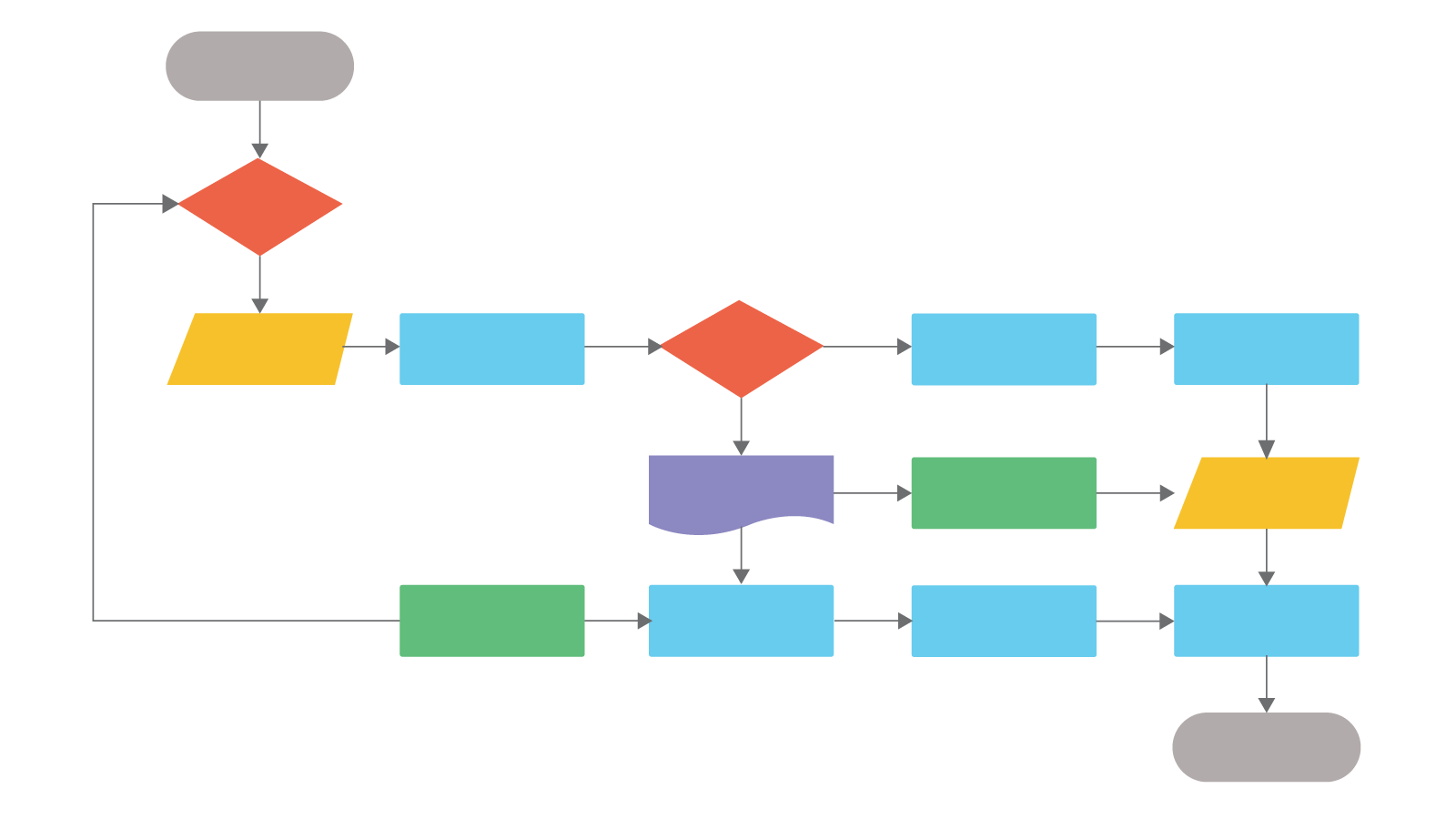
At a high level, the workflow needs to move each newly admitted international student through several steps so that the case can be ready for final processing. Students first must be identified for the financial document portion of onboarding, and their visa-related data must be updated so the process can move forward. A profile then has to be created, after which students must receive instructions and submit required financial records. Graduate assistants then confirm that those materials are complete and linked to the correct student record. After that, the Designated School Official (DSO) can complete the next review and processing steps. These required stages of the workflow did not change during the redesign. What changed was how those stages were carried out.
What Was Happening Before
Before the redesign, the workflow relied on multiple disconnected systems and a high degree of manual coordination. Graduate assistants would first run reports in the admissions platform used to manage applicant and admission records and add newly admitted international students to a spreadsheet. The graduate assistants then notified the DSO to update each student’s visa-related data in the student information system (SIS) so the process could move forward. From there, the spreadsheet was used to track where each case stood, including whether the SIS update had been completed, whether a profile had been created, whether financial documents had been submitted, and whether the case was still pending because of insufficient funds or a missing Intent to Enroll submission.
Document intake followed a similar pattern. Students uploaded financial documents through an admissions-facing submission channel. Graduate assistants then identified which students had submitted materials, but the reports used in this step did not always refresh in real time and did not always show whether all required documents had been submitted. As a result, some cases still required manual follow-up with students to request missing materials.
Those documents then had to be downloaded one at a time and re-uploaded into the student’s operational case record, which was the record used by the DSO to review the file and move the case forward. Communication about document receipt, case status, and next steps was tracked through ad hoc messages and spreadsheets, making it difficult for staff and leadership to answer basic operational questions in real time: Which cases were ready for review? Which were stalled? Where were the bottlenecks? What was the true backlog?
Several delays were initially attributed to “system issues,” but root-cause analysis showed that the most significant delays came from workflow dependencies that created unnecessary waiting or “silent stalls”—situations in which cases stopped moving forward without an obvious signal to staff that action was needed. For example, one step could not move forward until a student completed an administrative action in a separate part of the process. If that action was missed, the case did not progress, and the delay was not always obvious right away. In other cases, records had to wait for data updates to move from one system to another before the next step could begin. These dependencies were not inherently problematic; they were problematic because they created avoidable delays that were hard to see and difficult to manage in real time.
The Hidden Bottlenecks
A closer review surfaced recurring failure points:
- System synchronization timing introduced waiting periods before records could be processed downstream.
- Profile creation depended on a student’s completion of the Intent to Enroll step. In practice, that functioned as an unnecessary gate in the workflow because students who were ready to submit financial documents were already moving forward in the process.
- Document handling required 100% manual rework (download and re-upload), increasing both cycle time and error risk.
- Spreadsheet-based reporting required constant reconciliation and limited auditability.
- Operational leadership lacked real-time visibility into work-in-progress cases and stall reasons.
The combined effect was predictable: Processing speed varied widely, peak seasons amplified manual load, and staff time was consumed by chasing data rather than making decisions.
Design Principles That Guided the Redesign
We approached the redesign with four principles that generalize to other compliance-driven workflows:
- Remove dependencies that create silent stalls. If a step can block the workflow without anyone noticing, it will.
- Clarify ownership boundaries and decision points. Handoffs should be explicit, not implicit.
- Reduce double handling. If staff are moving the same document across systems, the design is doing extra work.
- Embed visibility into the workflow. Leaders should be able to see status, volume, and bottlenecks without asking someone to update a spreadsheet.
These principles helped separate regulatory necessities from legacy habits that persisted simply because “that’s how it has always been done.”
Cross-Functional Governance and Alignment
The effort required coordination across student services, admissions operations, IT, and support staff. Each group came to the table with a different definition of success. Admissions prioritized enrollment velocity; international services prioritized compliance and audit readiness; and IT prioritized stable integrations and testable requirements. To keep decisions moving, we documented business rules in plain language, mapped handoffs to specific roles, and introduced standardized request statuses that reflected the operational reality of the work. These statuses made work visible and enabled reliable routing, escalation, and reporting. This governance layer was critical. Without it, automation tends to amplify ambiguity—work moves faster but in inconsistent ways, and errors become harder to trace.
What Changed in the Workflow
The redesigned workflow moved document submission, case tracking, completeness review, and milestone notifications into one operational workflow system. Admissions and student record data still come from connected institutional systems, but the day-to-day work of receiving documents, reviewing completeness, tracking status, and moving cases forward no longer depends on delayed reports and manual spreadsheet reconciliation. Key changes of the new workflow include the following:
- Earlier, bulk profile creation for admits, reducing per-student setup time and avoiding downstream waiting due to timing gaps
- Critical workflow progression decoupled from student-triggered confirmation steps, which previously often caused silent stalls
- Direct document submission into the operational workflow, removing the need to download and re-upload files between systems
- A single-touch completeness check by graduate assistants before routing cases to the DSO for final processing
- Automated notifications tied to workflow milestones to reduce manual email handling
In practice, these changes removed much of the administrative work that had previously slowed the process. Graduate assistants no longer had to download and re-upload documents, the DSO no longer had to update visa-related data in the SIS, and profile creation was handled in bulk. That gave graduate assistants more time for other work and allowed the DSO to focus on processing, issuing immigration documents, and notifying students through the system.
From Spreadsheets to Embedded Analytics
The most visible operational change was reporting. Previously, graduate assistants and the International Student and Scholar Services (ISSS) team relied on spreadsheets for counts and status updates. Spreadsheets can work at small volume, but they become difficult to manage under peak load because they drift out of sync, fragment across versions, and do not reliably capture where cases are stalled or why.
Reporting was redesigned so that case status and milestone tracking were generated within the workflow system itself rather than being maintained separately in spreadsheets. As a result, graduate assistants, the ISSS team, and leadership could see real-time views of in-progress cases, completion milestones, and stall reasons without relying on manual spreadsheet updates. This visibility made it easier to identify bottlenecks as they emerged and rebalance workload based on actual case volume rather than informal impressions.
From an audit-readiness perspective, embedded analytics improved traceability. Status history and document timelines were available within the workflow record, reducing dependence on external artifacts and improving accountability.
What Improved and Why It Mattered
The redesign produced improvements that were both operational and risk-reducing:
- Readiness time compressed significantly once documents were complete because the workflow no longer waited on hidden dependencies.
- Manual document rehandling was eliminated, reducing error risk and staff time.
- Support staff handling steps were reduced through single-touch review and standardized routing.
- Leadership visibility improved through real-time status reporting and clarity about stall reasons.
- The workflow became more resilient to missed student actions because progress no longer depended on a single, student-triggered gate.
These outcomes mattered for students (fewer avoidable delays), for staff (less rework and clearer priorities), and for the institution (stronger compliance posture and better peak-season scalability).
How This Scales Beyond International Onboarding
Although the immediate context was international student onboarding, the redesign approach is relevant to many higher education workflows that share the characteristics of multiple systems, compliance constraints, a high volume of documents, and seasonal surges. Examples include employment authorization processing, credential verification, vendor onboarding, and other document-intensive reviews. In each case, the same questions apply: Where are the hidden dependencies? What steps create double handling? Who owns each decision point? What visibility do leaders have without manual reporting?
The main lesson is that scalable efficiency is usually not achieved by adding more staff or more tools. It is achieved by designing a workflow that reflects how work actually happens, then reinforcing that design through clear ownership, standardized statuses, and embedded visibility.
Conclusion
Digital transformation efforts often focus on the technology layer, but durable gains come from redesigning the process layer and clarifying the governance layer. In this case, we reduced cycle time and increased operational resilience by removing silent stalls, simplifying handoffs, and replacing spreadsheet-based tracking with embedded analytics. For higher education teams facing similar bottlenecks, the takeaway is practical: Map the workflow from end to end, make dependencies visible, define ownership and statuses, and build reporting into the process. Those steps turn a fragile, manual workflow into one that scales—and one leaders can manage in real time.
Adwoa Arhin is a Business Analyst at the University of North Carolina at Greensboro.
© 2026 Adwoa Arhin. The content of this work is licensed under a Creative Commons BY 4.0 International License