Generative artificial intelligence can expand the reach of open educational resources, but educators and institutions need a clear framework for licensing, disclosure, and responsible use.
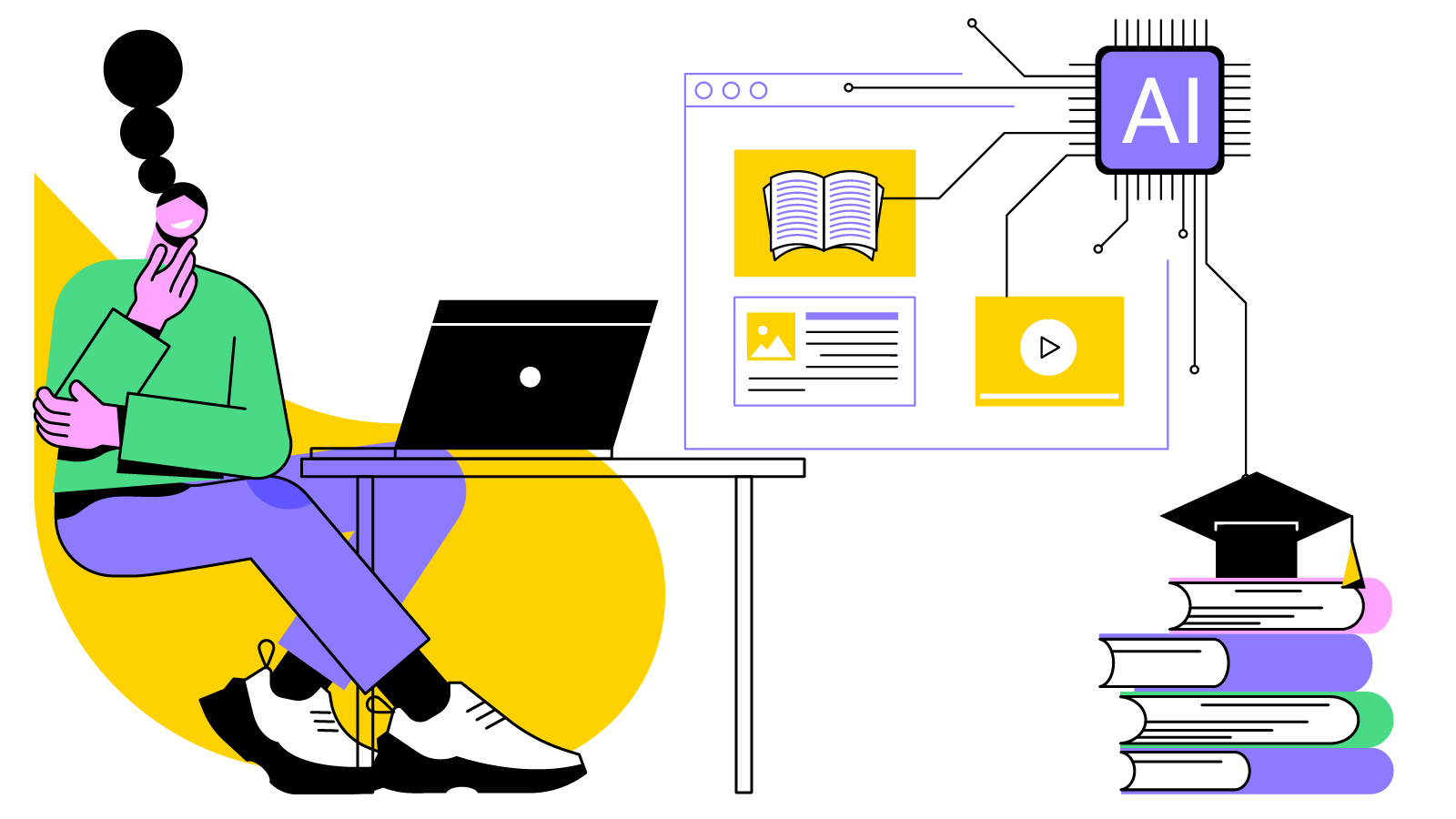
Generative artificial intelligence (GenAI) offers both opportunities and challenges for open education, particularly in relation to open educational resources (OER). OER are teaching, learning, and research materials that reside in the public domain or are released under an open license, such as Creative Commons, allowing faculty and others to freely use and adapt them. Because GenAI can help individuals create text, audio, video, and applications, it offers rich possibilities for amplifying the range and impact of OER. Integrating GenAI into OER workflows, however, is not simply a matter of adding a new tool. It raises questions about authorship, control, instructional intent, and pedagogical value. Using GenAI effectively in OER creation requires educators to define its scope, determine where it meaningfully supports learners, and assess where a human-centric approach should be prioritized. Using a practical framework to prepare and integrate GenAI into OER can help educators approach this process intentionally, iteratively, and transparently.
Foundational Considerations
Align Philosophies of Openness and GenAI Use
In some ways, GenAI and open education may appear to share complementary goals. Both can support more equitable access to knowledge, reduce barriers to learning, and enable greater customization of content to meet diverse learner needs. However, the alignment between GenAI and open education is not automatic, and in some cases, the two may be in direct tension. While OER emphasizes transparency, shared ownership, and user agency, many AI systems operate as closed platforms with opaque decision-making processes. Faculty often encounter tools selected by institutions without clear communication or shared governance about how they should be used, why they were selected, or why the companies behind these tools should be trusted.
Because transparency is a key value of the open education community, data ethics is another critical area of concern. GenAI systems frequently draw from user data to deliver "personalized" experiences, but personalization is often determined by algorithms trained on biased or incomplete datasets. These practices raise questions about who controls the system, how student data is used, and whether the resulting outputs truly serve learners or institutional efficiency goals.
These concerns parallel longstanding critiques among the open education community about surveillance, extractive technologies, and the erosion of pedagogical autonomy.Footnote1 Just as faculty have questioned restrictive learning management systems (LMS), they now face similar challenges with GenAI: Who sets the parameters, who interprets the outputs, and how much agency do educators and students actually retain?
To align GenAI use with open education, intentional design and ethical scrutiny are essential. This means choosing Gen AI tools with more transparent practices, centering user agency, and treating GenAI as a means to enhance—not replace—human judgment and care. These criteria offer a practical lens for evaluating GenAI in open education contexts.
The Licensing Question
A resource is typically considered to be an OER if it is openly licensed in a way that allows users to continuously and freely carry out the 5 R activities: retain, revise, remix, reuse, and redistribute.Footnote2 That flexibility advances access, equity, and pedagogical use and adaptation by reducing cost barriers and allowing for localization and customization.
However, as GenAI content enters OER workflows, questions of ownership, attribution, and licensing become more complicated. GenAI tools can generate lesson plans, quiz questions, study guides, and more, but these outputs are not automatically considered OER. Educators must still assign an open license if they intend for others to use, share, or adapt that content freely.
This step is not merely procedural. Without licensing, the legal permissions for reuse and remixing are unclear, even if the content itself is freely accessible. Additionally, when GenAI materials are directly adapted from or incorporate existing OER, honoring the original license terms and ensuring proper attribution are essential.
In some cases, however, a creator might not be able to assign a license because the work is not copyrightable. Currently, the legal standing around GenAI works continues to evolve, but early legal decisions and the U.S. Copyright Office have indicated that "copyright does not extend to purely AI-generated material . . . ."Footnote3 As a result, such works are in a state of limbo: They cannot be copyrighted, but they also have not been deemed to be in the public domain, so their status is murky at best.
To clarify, the more a person changes a GenAI output, the stronger their copyright claim may be and, therefore, the more Creative Commons licensing options they have. For instance, something taken whole cloth from GenAI is probably available to copy and share; however, there is no legal basis or protection for doing so. Yet, if someone iterates back and forth with the GenAI and makes edits to the final product, that person has a stronger claim to copyright. Similarly, if someone prompts GenAI to create an outline for a paper but then writes it on their own based on that outline, they will have a substantial claim to copyright. Putting sweat equity into something results in stronger ownership. Even if the goal is to give it away, a person still needs the right to do so.
GenAI presents a related, equally important challenge: How can creators ensure that their work isn't misrepresented by platforms that train AI models? One answer is CC Signals, introduced by Creative Commons in 2025.Footnote4 Designed to support ethical and transparent data practices in the age of AI, CC Signals offers creators a way to clearly communicate how their content may be used by AI systems, reinforcing principles of consent, attribution, and fairness. They operate similarly to Creative Commons licenses but are optimized for machine readability. By helping ensure that creative and scholarly contributions are respected and protected, CC Signals addresses growing concerns about AI models harvesting public content without clear permission or compensation. The relationship between licensing and GenAI OER content is evolving. If OER reflects the 5 R attributes, creators who use GenAI must determine how much effort will suffice to attain copyright. In April 2026, Creative Commons provided an update on CC Signals that emphasizes user agency. Rather than focusing solely on protecting creator preferences, CC Signals has broadened its scope to address the challenges that profit-driven AI presents to the commons.Footnote5 Taken together, these issues underscore the need for a practical way for educators and creators to understand how OER and GenAI connect and to feel more in control of protecting their work.
The GenAI–OER Adoption Framework
The GenAI–OER Framework offers one such approach. This framework builds on the OER Adopt–Adapt–Build model, which gives educators clear entry points for understanding OER by categorizing engagement into three primary approaches:
- Adopt. Identify an existing OER and incorporate it directly into a course.
- Adapt. Modify an existing OER to better align with course needs, ideally sharing the revised version for others to use.
- Build. Create new OER materials and contribute them to the wider community.
The Adopt–Adapt–Build model circulated widely in OER practice throughout the 2010s and remains relevant as a practical way for faculty to understand their engagement with open resources.
The GenAI-OER Adoption Framework guides faculty in considering how GenAI intersects with OER use and development.Footnote6 This new framework identifies six possible modes of engagement. While the categories are neither comprehensive nor mutually exclusive, they provide educators with an accessible way to navigate entry points without being overwhelmed.
- Curate. GenAI supports the discovery and evaluation of OER across repositories, assists with translation, or identifies gaps. Faculty define requirements, assess GenAI suggestions, or determine where new resources are needed.
- Contextualize. GenAI adapts resources to specific courses and student populations by tailoring reading levels, localizing examples, offering multiple formats, or enhancing accessibility. Educators review and refine these outputs to ensure relevance and accuracy.
- Co-create. GenAI generates preliminary drafts, suggests instructional strategies, creates practice problems, or proposes interactive components. Faculty guide the process, supply disciplinary expertise, and validate the results.
- Cultivate. GenAI contributes to quality assurance by sourcing verification materials, detecting bias, comparing alternatives, or flagging outdated content. Faculty establish standards and maintain final editorial control.
- Amplify. GenAI streamlines dissemination by formatting materials, generating metadata, or recommending venues for sharing. Faculty determine licensing, transparency in GenAI use, and repository placement.
- Sustain. GenAI assists with the ongoing review of OER by analyzing usage data, surfacing opportunities for improvement, and incorporating feedback. Faculty direct updates, integrate improvements, and ensure long-term quality.
The GenAI-OER Adoption Framework highlights how GenAI can extend established practices of adoption, adaptation, and creation while underscoring the continued centrality of faculty expertise and decision-making.
Considerations for the GenAI–OER Journey
Before integrating GenAI into OER practices, educators should assess their own readiness as well as the readiness of their institution. The following considerations can help educators determine when and how to use GenAI in their OER work.
Which tools are safe, appropriate, and consistent with institutional expectations? Some institutions have adopted specific GenAI platforms, such as Microsoft Copilot or Google Gemini, and embedded them within existing ecosystems, such as LMSs or productivity suites. While these tools may be institutionally supported, that support is not always clearly communicated to faculty. At the same time, a wide range of GenAI tools exist outside of institutional contracts, including ChatGPT, Claude, and open-source alternatives.
Faculty should determine which tools are available and how accessible and functional they are for their specific context. They should also consider which tools make sense for the kinds of OER they hope to develop or adapt. For instance, faculty may not want to ask students to create a GenAI simulation using external tools for which the institution has no legal agreements.
What level of disclosure should faculty provide to students? Disclosure may not be necessary when GenAI is used in limited ways, such as finding OER. However, disclosing GenAI use may be useful as an instructional tool to help build students' GenAI literacy and expand their understanding of how professionals use such tools.
What is the institutional stance on GenAI? Some colleges and universities have formal AI policies or usage guidelines, while others have no policies or unclear guidance. Faculty should investigate whether there are any existing institutional policies on GenAI use, academic integrity, data privacy, and intellectual property, and consider whether those policies align with their pedagogical goals.
What gaps exist in understanding how GenAI is used? Faculty may encounter unclear communication about GenAI tools and professional development opportunities, or limited transparency about specific use cases related to integrating GenAI into OER (for example, whether the practice is acceptable and what the expectations are for documenting or disclosing use). These gaps can leave educators feeling unprepared to pursue OER with GenAI.
When guidance is unclear or absent, deeper concerns about trust often emerge. These concerns extend not only to the tools themselves but also to the institutions that promote or require their use. Faculty are often introduced to GenAI through institutional partnerships or mandates, but they are not included in the decision-making process. In other cases, they may not have been introduced to GenAI at all because their institution has not made progress on GenAI initiatives. This lack of involvement and institutional transparency can breed skepticism, confusion, or resistance among faculty.
Clear communication around why certain tools are adopted, what data they use, and how they align with institutional values is essential. Offering meaningful consent in legal and pedagogical terms is also crucial. Faculty and students need to understand not only what a GenAI tool does, but why they are being asked to use it and how it fits into broader teaching and learning goals.
Surfacing these issues rather than minimizing them helps build trust. Institutions and educators must be willing to ask hard questions about bias, surveillance, and power to ensure that GenAI use supports, rather than undermines, the transparency and agency that open education promises.
An Incremental Approach
Integrating GenAI into open educational practice doesn't need to be overwhelming or all-encompassing. In fact, a slow, deliberate approach is more likely to produce meaningful results and sustainable practices. Beginning with small-scale experimentation allows educators to explore affordances, surface challenges, and refine their use without compromising core pedagogical values or overwhelming themselves or their students.
Start Small
Rather than attempting to rework an entire course, educators can begin by using GenAI with a single module, assignment, or resource. This could include using GenAI to draft a rubric, locate new learning content for a module, or localize part of an OER for a specific learner group. These entry points offer an opportunity to understand how GenAI interacts with existing teaching practices and expectations.
Documenting the process is essential. What goals shaped the use of GenAI? What did the tool produce, and how well did the output align with those goals? Treating these experiments as prototypes rather than polished products encourages exploration without the pressure of perfection.
Share the Process
One of the most valuable contributions educators can make to the broader community is sharing what they've learned—whether through informal conversations, departmental meetings, or professional development sessions. These discussions can help build collective knowledge and surface a range of perspectives.
Educators can also share templates, annotated examples, or brief write-ups describing how they used GenAI in a specific OER context. Contributing these materials to OER repositories not only supports other faculty, it also reinforces the collaborative, transparent ethos that underpins both open education and responsible GenAI use. By integrating GenAI incrementally and reflectively, educators can avoid overcommitment, remain grounded in their pedagogical goals, and contribute to a growing body of open, practice-based knowledge.
Ready, Not Rushed
As with all meaningful pedagogical innovation, the goal of integrating GenAI into OER is not simply to adopt a new tool but to align practice with the core values of openness, equity, agency, and care. Rather than rushing to scale GenAI across courses or systems, colleges and universities should establish ongoing processes for inquiry, experimentation, and refinement and set clear expectations for licensing, disclosure, human review, and governance. Moving forward with curiosity and caution means starting small, questioning assumptions, reflecting on impact, and being transparent about goals and limitations. It also means remaining attentive to how GenAI tools shift roles, reshape relationships, and raise new ethical questions about knowledge, labor, and learning. By approaching this work as a living practice, educators can navigate the complexities of GenAI and OER in ways that are thoughtful, human-centered, and rooted in the values that define transformative teaching.
Authors' Note
We developed this article through a series of conversations about OER and GenAI, which were transcribed using Google Meet. We used ChatGPT and Claude to generate and compare potential outlines based on those transcripts and then refined the outline and prompted the same tools to draft sections of the article using our ideas and language. While this yielded mediocre results (as expected), it also allowed us to move into a phase of human-led editing, writing, and revising. We returned to GenAI to refine some language. Chat logs are available upon request.
Notes
- Daniel Krutka, "From Access to Equity: Open Education in the Age of AI," Civics of Technology, July 19, 2025.Jump back to footnote 1 in the text.
- David Wiley, "Defining the 'Open' in Open Content and Open Educational Resources," Improving Learning, September 26, 2023.Jump back to footnote 2 in the text.
- Copyright and Artificial Intelligence Part 2: Copyrightability, (United States Copyright Office, January 2025), iii.Jump back to footnote 3 in the text.
- Creative Commons, "Introducing CC Signals: A New Social Contract for the Age of AI," Creative Commons (blog), June 25, 2025.Jump back to footnote 4 in the text.
- Creative Commons, "Update on CC Signals: What Changed and Why," Creative Commons (blog), April 23, 2026.Jump back to footnote 5 in the text.
- To learn more about this framework, see Lance Eaton, "A Framework for Using AI with OER," AI + Education = Simplified (blog), August 25, 2025.Jump back to footnote 6 in the text.
Lance Eaton is Senior Associate Director of AI in Teaching and Learning at Northeastern University.
Lawrence H. Davis is Professor of History at North Shore Community College.
© 2026 Lance Eaton and Lawrence H. Davis. The content of this work is licensed under a Creative Commons BY-SA 4.0 International License