
Institutions that integrate accessibility into their digital infrastructure are better positioned to meet legal requirements, enhance student experiences and outcomes, and expand their reach and competitiveness.
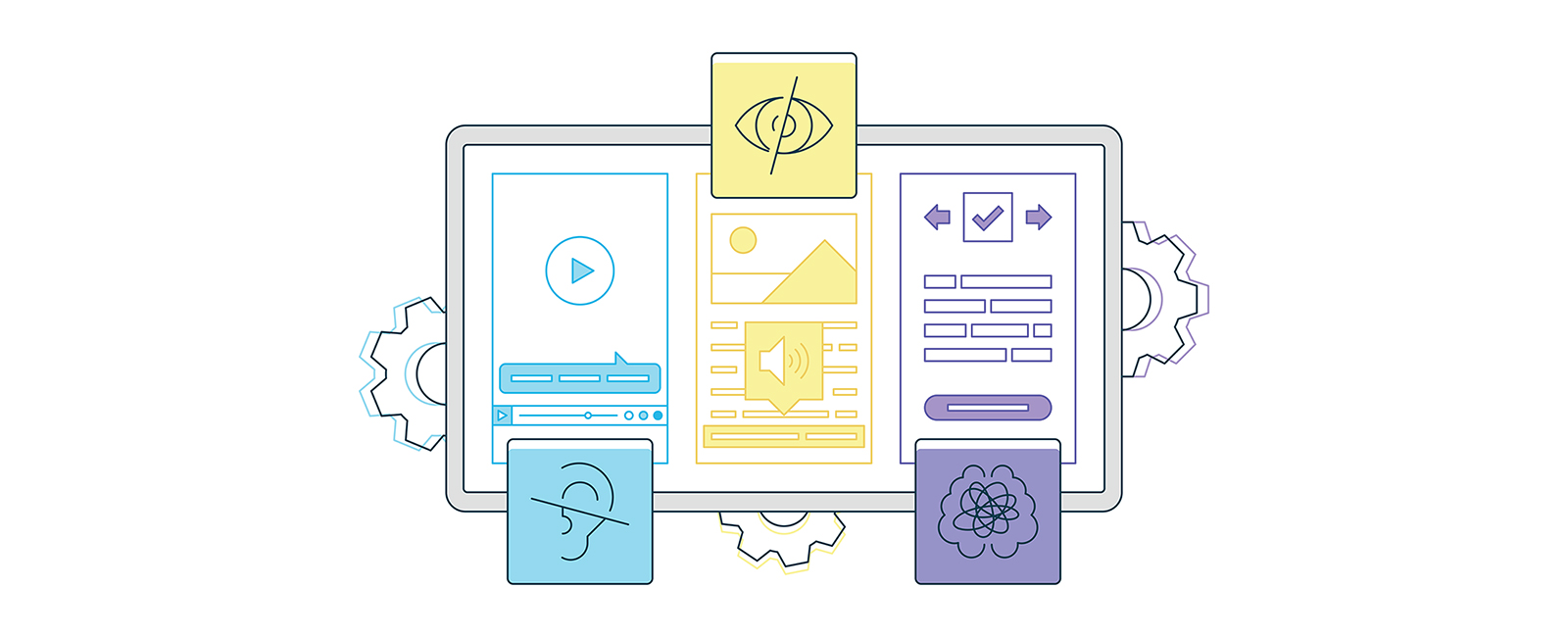
Even as accessibility gains more visibility in policy conversations and conference programs—not to mention procurement checklists—some higher education leaders and campus stakeholders are wondering whether they can afford to slow down their efforts. Accessibility work can be complex, budgets are tight, and new demands arrive daily. Yet stepping back in response to these pressures would run counter to a decades‑long trend in law, peer practice, and student expectations. Federal and state requirements have become clearer, and students now expect accessible features across the digital tools they use both inside and outside the classroom. Institutions are also increasingly interconnected through shared platforms and online programs where accessible content is a foundational requirement.
Among these nationwide (and even worldwide) conversations, colleagues often encounter a simple but important question: "Do we really need to keep prioritizing digital accessibility right now?" Depending on who is asking, the underlying concern may involve legal exposure, student expectations, constrained budgets, competitive pressures, or emerging technologies. The good news is that the answer does not hinge on a single, perfect justification. Multiple independent trends support the same conclusion, and this article explores several of those paths. The goal is not to add one more obligation to an already long list, but to help institutional leaders, IT professionals, and accessibility advocates connect accessibility to other institutional priorities.
Legal and Compliance Requirements
Federal Laws
Section 504 of the Rehabilitation Act
Since the 1970s, the Rehabilitation Act, also known by its statutory designation as Section 504, has mandated that entities receiving federal funds—think student loans or research funds—cannot treat people differently because of a disability.Footnote1 Notably, this law predates the widespread use of digital technology on modern campuses. In recent years, this law has been interpreted to mean that institutions cannot give students with and without disabilities unequal experiences. For example, if the learning management system (LMS) used by an institution is inaccessible to students who use assistive technology, those students must navigate an entirely different path to access course materials, participate in course discussions, and submit and receive assignments. Achieving functional equivalence for these experiences would require substantial effort. The work to make them available for self-service 24/7, for example, would be costly and challenging, with minimal long-term benefit to the institution. This unequal treatment has been the subject of hundreds of cases reviewed by the Office for Civil Rights under the last several presidential administrations, making it a well-established, nonpartisan precedent.Footnote2
The Americans with Disabilities Act (ADA)
Much like Section 504, the ADA was enacted in 1990, well before computers and the internet became integral to our lives and institutions. The ADA was meant to ensure that people with disabilities could fully participate in all aspects of society. Title II of the ADA applies to state and local governments, including public higher education institutions. Title III of the ADA applies to places of public accommodation, which encompasses everywhere else people can reasonably expect to go, such as stores, transit systems, banks, movie theaters, and private colleges and universities.Footnote3 For two decades, courts have ruled that the ADA applies to technology across these settings.
Title II Web Accessibility Rule
Even though the courts have long held that civil rights protections apply to widely used technology systems, these protections are not explicitly stated in the legislation. This lack of specificity has led some to continue challenging how nondiscrimination requirements apply to technology. In 2024, the U.S. Department of Justice concluded a rulemaking period with the release of the Title II Web Accessibility rule, which requires state and local governments, including public higher education institutions, to meet WCAG 2.1 AA for nearly all web and mobile app content. This requirement applies to almost all internal and external content used by students, faculty, staff, and members of the public at postsecondary institutions.
As the higher education technology community noted during the public comment period, systemic efforts to improve technology accessibility still have significant room for improvement. Institutions that are not already working toward compliance have only a few months remaining until the April 2026 compliance deadline; some smaller entities (based on the population size of the governmental entities, not the size of institutional enrollment) have until April 2027 to comply.Footnote4
State Laws
Technology access for people with disabilities is not—and should not be—a partisan issue. Indeed, states have a patchwork of requirements that do not necessarily correlate with a state's dominant political affiliation. For example, Oklahoma and Maryland have both enacted accessibility laws despite very different political contexts. The Oklahoma Electronic Information Technology Accessibility (EITA) Act, adopted in 2004, establishes requirements for many state programs and services, including education.
Maryland adopted its first state digital accessibility law in 2005 and updated its Digital Accessibility Policy in 2024 to strengthen requirements across multiple areas of state government.
Most state laws align with or build on broader federal digital accessibility regulations, though discrepancies remain. Institutions should review state and local requirements to identify any differences or additional obligations and ensure compliance.
International Laws and Regulations
While the laws referenced thus far are specific to the United States, the need for people with disabilities to access technology transcends borders. Institutions serve a wide range of audiences and members, and when they create and publish information online—via institutional websites, social media channels, publications, datasets, and more—it can be accessed around the world instantly.
Different legal requirements may apply depending on an institution's audience, level of engagement or commerce, and the purpose of its activities around the world. Many of the international laws are grounded in the principles of the Convention on the Rights of Persons with Disabilities (CRPD), a United Nations (UN) treaty with nearly two hundred signatories worldwide. Notably, the United States signed the CRPD in 2009 but has not ratified it in the Senate.Footnote5 The CRPD provides legal and policy guidance to advance and protect the rights of people with disabilities around the world, covering areas including accessibility, information access, and education.
In 2025, the European Accessibility Act (EAA) expanded accessibility requirements for electronic content and products used across member states. Other countries, including Canada and India, also have specific laws requiring technology products and services to meet modern accessibility standards.Footnote6 Unlike some older U.S. laws that were adopted before widespread technology use, these international regulations often explicitly require technology accessibility in alignment with technical standards. Institutions should review accessibility requirements in any jurisdiction where they have partnerships, provide services, or aim to expand their audience.
Durability of U.S. Laws
With all the upheaval to longstanding structures in 2025, some have asked whether government intervention might halt the decades-long march toward improving technology accessibility. Hardly. While agencies' priorities may shift with changes in administrative and executive leadership, these longstanding accessibility expectations are based on laws passed by Congress. Administrative actions cannot undo them entirely. The fact that not all the laws in this section are federal also means that if such explicit requirements, such as the ADA Title II rule, were changed or undermined in the future, then federal statutes, many state laws, and further international requirements all still indicate a multilayered, global compliance regime that prioritizes accessible electronic content and systems.
Improved Student Experience and Expectations
Improving the student experience should be the primary driver for advancing accessibility. In practice, however, discussions about accessibility often focus on compliance and legal obligations. Nevertheless, colleges and universities exist to support students, and addressing accessibility from the start—by providing accessible course materials, learning management systems, and communication platforms—can make many processes easier for students, faculty, and staff alike.
There is so much more that higher education leaders, faculty, and accessibility experts can do to ensure all students can succeed. Roughly one in five students receives some form of accommodation, yet accommodation processes have been increasingly criticized as unwarranted systems that do not benefit those they are intended to support. However, research has shown that the number of people who need accommodations continues to grow.Footnote7 A more pressing challenge is the number of students who need support but do not seek or receive services that might otherwise improve their educational experience and academic outcome.Footnote8
Not everyone who receives an accommodation needs electronically accessible materials, yet many students prefer accessibility features, such as video captions.Footnote9 The same accessible electronic text that enables a blind or visually impaired student to read can also help any student listen to a text while commuting to school. Just as curb cuts benefit wheelchair users and people with strollers or suitcases, accessible design benefits all learners, not just the small proportion of users who are perceived to need it.
Furthermore, students have come to expect accessibility features in their everyday experiences. Streaming services, for example, have made massive strides in accessibility in the past decade. Consider your favorite streaming title. Next time you view, look at the settings. You can likely toggle the captions on or off easily, or switch the language to "English AD [audio description]" to get a narrative description of the action. When these features are embedded in low-cost media, it's no wonder students are frustrated when they cannot get the same features in courses that typically cost significantly more.
Accommodation offices play a crucial role in supporting individual students, but they were never designed to be the primary mechanism for making an institution's entire digital ecosystem accessible. Their mandate is usually to respond to individual needs, often under tight time pressure, not to redesign course templates, remediate complex platforms, or renegotiate vendor contracts. When core systems and content are inaccessible, disability services staff are pushed into permanent triage mode, and students experience delays and uncertainty. Systemic digital accessibility—policies, procurement expectations, templates, and authoring tools that produce born‑accessible content—must be owned by the institution. IT organizations, academic leadership, procurement teams, and communications offices all have roles to play. When those roles are aligned, accommodation offices can focus on doing what they do best: supporting specific students whose needs go beyond what can realistically be standardized.
The Role of Faculty
Faculty autonomy and academic freedom are core values in higher education, and accessibility does not undermine them. Rather, it helps ensure that the curriculum they design is fully available to all enrolled students. Institutional policies routinely set expectations for syllabus elements, the use of LMSs, and timelines for grade submission while preserving faculty autonomy over what and how they teach. Accessibility can be framed similarly: as part of the shared infrastructure that supports teaching and learning. Providing accessible templates, training, and tools reduces the burden on individual faculty members rather than dictating course content. When faculty can trust that the platforms and materials they use are already accessible, they can focus more time and energy on pedagogy.
Financial Pressure
Accessible content is almost always less expensive and easier to produce up front. While remediation after the fact is sometimes necessary, it is typically less efficient for the institution, more frustrating for those who need accessible content, and more likely to violate legal requirements. This cost differential is one of the most important reasons why institutional leaders and IT departments should advance accessibility while being mindful of institutional costs. As the Department of Justice noted in the 2024 release of the Title II rule, "The Department believes that it is more efficient and effective for public educational institutions to use the two- or three-year compliance time frame to prepare to make course content accessible proactively, instead of having to scramble to remediate content reactively."Footnote10
Across industries, accessible materials have been shown to improve the overall satisfaction of customers and constituents who use them, not just those with disabilities.Footnote11 When materials are not accessible and must be remediated on demand, the work often occurs just in time, when such services—whether internal or external—are the most expensive. Although investing in an accessible content production pipeline might seem daunting or expensive, doing so is often more cost-effective than last-minute efforts to remediate content that may not be shared with all students. In large institutions, these comparisons can feel confusing and unwarranted because they often do not originate from the same line items in the budget. However, up-front investments in born-accessible materials can yield positive downstream cost efficiencies and better user experiences for everyone.
Higher Education Ecosystem
Stay Competitive
Colleges and universities have been working on accessibility for decades. It's never too late for an institution to begin or reinvigorate its accessibility journey. Systemically, a lot of work is needed to ensure that aspiration and rhetoric translate into effective policies and practices. Does your institution have robust policies and processes in place to improve digital accessibility? Are there empowered leaders overseeing systematic efforts to deliver on the requirements discussed in this article? Even if your institution is behind where you would like it to be, a peer institution or an exemplar in your region is likely doing some work in this area and can provide direction.
Accessibility involves technical standards and implementation, but institutions do not need to start from scratch. Widely adopted guidelines, such as WCAG 2.1 or 2.2 AA, along with community-developed tools, provide a practical starting point.Footnote12 Many common authoring platforms include built‑in accessibility checkers or templates. The challenge often becomes activating those features, training people to use them, and integrating them into routine workflows. Institutions can begin with high-impact actions such as captioning required video content, using accessible document templates, and establishing procurement expectations. Expertise can then be deepened over time. As with other domains that have technical standards and compliance obligations, such as information security, higher education leaders, faculty, and staff rarely become experts overnight.Footnote13 Instead, they build capacity incrementally, often in partnership with peer institutions, consortia, and community groups.
Pockets of excellence in digital accessibility have been pervasive across a wide variety of institution types. The EDUCAUSE IT Accessibility Community Group, for example, is a practitioner-led forum where experts and interested parties regularly share tips, resources, and best practices. Some members have decades of experience, while others are newer to the field and have learned about requirements in response to upcoming compliance deadlines. Regardless of where your institution is on its journey to build an accessible digital campus, there are hundreds—if not thousands—of committed professionals willing to help and share insights.
Expand Reach
This time of great change has created many opportunities for institutions to work more closely together by sharing course materials, contributing to open educational resources, forming consortia to share administrative assets, scaling online courses beyond traditional boundaries, launching startup incubators, and working with academic and nonacademic publishers. As the Title II rule deadlines approach, many institutions are asking partners about the accessibility of materials and platforms. If accessibility has not been explicitly included in your roadmap for these efforts, now is the time to incorporate it.
Colleges, universities, and technology practitioners contribute significantly to the broader higher education ecosystem. When those contributions are not accessible, their reach and long-term impact are inevitably limited. Higher education institutions must continue to collaborate and demand more of their solution partners so that the third-party products institutions rely on make education and employment experiences more accessible, not less.Footnote14 A faculty member or frontline administrator shouldn't have to be a quasi-accessibility expert to produce and distribute accessible content. And yet they often need to be because many authoring tools do not make it easy to create born-accessible content. While solutions exist to automate post-hoc remediation—which can be helpful for catch-up work—it is not a sustainable path forward. EDUCAUSE and its partners encourage solution providers to clearly communicate their accessibility efforts through tools such as the Higher Education Community Vendor Assessment Toolkit (HECVAT).Footnote15 This work must continue, and even accelerate, to help institutions meet compliance requirements. Otherwise, new entrants focused on accessible, compliant experiences might have a significant market opportunity to unseat incumbents unable to adapt.
AI Readiness
The research and teaching missions of colleges and universities depend on the open sharing of high-quality information with the public and scholarly communities. Accessibility requirements for logically ordered data, semantic markup, and specific metadata roles have long improved content discoverability through search engine optimization (SEO). As generative artificial intelligence (GenAI) platforms and AI-summarized search results are increasingly prioritized over traditional lists of links, accessibility-forward content will help ensure it is answer engine-optimized (AEO).Footnote16 This approach to content generation will help faculty, researchers, and marketers promote the work taking place at their institutions, raising its visibility, attribution, and authority in new discovery paradigms.
A growing marketplace of "quick-fix" tools promises to make websites or platforms accessible through automated overlays or AI‑based adjustments. While some of these tools can help identify issues or provide stopgap support, they do not change the underlying structure of content or interfaces. Reliance on overlays can create a false sense of security and, in some cases, introduce new barriers for assistive technology users. Sustainable accessibility comes from designing and procuring systems that are accessible by default, not from adding a layer on top of inaccessible code. Automated or AI-based tools may have a place in a broader toolkit—as input for testing or for prioritizing remediation, for example—but they are not substitutes for accessible design, clear standards, or accountability from vendors and content creators.
Why Wait?
Waiting until a compliance or enforcement action triggers efforts to improve accessibility may feel pragmatic in the short term, but it is a risky and inefficient strategy. Legal and regulatory frameworks for accessibility have been in place for decades, and recent clarifications signal increasing specificity, not retreat. Institutions that delay action may find themselves remediating large volumes of content under compressed timelines, often at a higher cost and with greater disruption. More importantly, waiting until a complaint is filed means that real students, staff, or members of the public have experienced barriers significant enough to warrant a formal grievance. Proactive planning, even if incremental, allows institutions to prioritize high-impact systems, spread effort over time, and engage vendors earlier. It is rarely less expensive or easier to rebuild accessibility after the fact.
Conclusion
The importance of digital accessibility can be articulated through multiple, complementary perspectives. As with any effective communication strategy, success depends on conveying messages with conviction and authenticity and addressing the needs and concerns of the audience. Familiarity with one or more of the strategies described in this article can help broaden support for digital accessibility initiatives on your campus. Whether the motivation is delivering a high-quality student experience, meeting legal requirements, stewarding resources sustainably and efficiently, staying competitive in an evolving ecosystem, reaching the widest possible audience, or ensuring that institutional information remains relevant in a rapidly evolving technical ecosystem, all signs point in the same direction: toward improving the digital accessibility of campus technology environments.
Notes
- "Rehabilitation Act of 1973, 29 U.S.C. § 701 et seq.,"(1973).Jump back to footnote 1 in the text.
- U.S. Department of Justice Civil Rights Division and U.S. Department of Education Office for Civil Rights,"Joint Dear Colleague Letter: Online Accessibility at Postsecondary Institutions," May 19, 2023.Jump back to footnote 2 in the text.
- "Americans with Disabilities Act," 42 U.S.C. § 12101 et seq. (1990).Jump back to footnote 3 in the text.
- "Nondiscrimination on the Basis of Disability in State and Local Government Services, 28 C.F.R. pt. 35," (2024); see also "Fact Sheet: New Rule on the Accessibility of Web Content and Mobile Apps Provided by State and Local Governments," ADA.gov (U.S. Department of Justice, Civil Rights Division), April 8, 2024.Jump back to footnote 4 in the text.
- UN General Assembly,"Convention on the Rights of Persons with Disabilities," 2007.Jump back to footnote 5 in the text.
- Lainey Feingold, "Global Law and Policy," LF Legal, accessed January 9, 2026.Jump back to footnote 6 in the text.
- U.S. Department of Education, National Center for Education Statistics, "Number and Percentage Distribution of Students Enrolled in Postsecondary Institutions, by Level, Disability Status, and Selected Student Characteristics: Academic Year 2019-2020," 2023.Jump back to footnote 7 in the text.
- Dana C. Gierdowski and Joseph D. Galanek, "ECAR Study of the Technology Needs of Students with Disabilities, 2020," (EDUCAUSE, 2020).Jump back to footnote 8 in the text.
- Jenay Robert, "2022 Students and Technology Report: Rebalancing the Student Experience," (EDUCAUSE, 2022).Jump back to footnote 9 in the text.
- "Nondiscrimination on the Basis of Disability; Accessibility of Web Information and Services of State and Local Government Entities," Federal Register 89, no. 80 (April 24, 2024): 31320–31396.Jump back to footnote 10 in the text.
- Kira Young-Gibson, "Beyond Compliance: The Economic Case for Digital Accessibility," (National Association of State Chief Information Officers, August 2025).Jump back to footnote 11 in the text.
- World Wide Web Consortium, "Web Content Accessibility Guidelines 2.2,"W3C, 2023.Jump back to footnote 12 in the text.
- Mark McCormack, "EDUCAUSE QuickPoll Results: Risks and Opportunities in Higher Education Accessibility," EDUCAUSE Review, August 21, 2023.Jump back to footnote 13 in the text.
- Kyle Shachmut, "Asking the Right Questions for Procuring Inclusive, Accessible Technology," EDUCAUSE Review, October 25, 2021.Jump back to footnote 14 in the text.
- Kyle Shachmut and Eudora Struble, "Accessibility in Technology Acquisition with HECVAT 4," EDUCAUSE Review, April 16, 2025.Jump back to footnote 15 in the text.
- Talie Smith, "How Accessibility Prepares Your Website for AI Search,"Forbes, November 13, 2025.Jump back to footnote 16 in the text.
Kyle Shachmut is Senior Director, Digital Accessibility Services at Harvard University and is finishing a seven-year run as co-chair of the EDUCAUSE IT Accessibility Community Group.
© 2026 Kyle Shachmut. The content of this work is licensed under a Creative Commons BY-NC-SA 4.0 International License