Learn how one higher education institution is modernizing and strengthening its endowment and fundraising strategy by upgrading its data solutions to extract, normalize, and integrate data from various departments.

This content is sponsored by K16 Solutions, a 2025 EDUCAUSE Mission Partner. EDUCAUSE and K16 Solutions collaborated to identify the topic and the institution for this case study, as well as formulate and evaluate the research objectives.
Institutional Profile
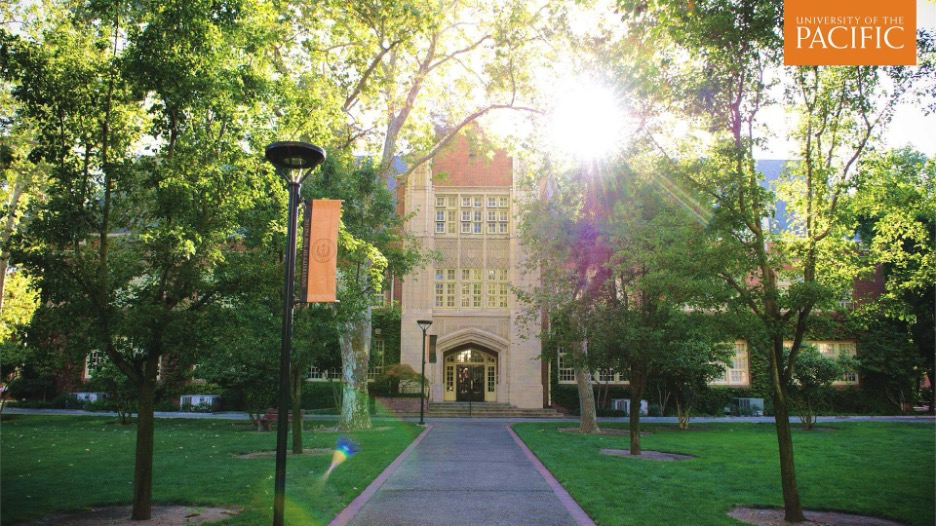
Founded in 1851, University of the Pacific is California's first and oldest university. The Northern California higher education institution, with nearly 7,000 students and more than 120 academic programs across campuses in Stockton, Sacramento, and San Francisco, is ranked in the top 100 among American colleges and universities by The Wall Street Journal.Footnote1
Pacific offers students an immersive educational experience that emphasizes one-on-one relationships with faculty and advisors, as well as learning opportunities on and off campus. The university is ranked 36th in social mobility nationally and is in the top two percent in annual alumni earnings among all four-year colleges and universities. Pacific is also the nation's top private university designated by the U.S. Department of Education as both a Hispanic-Serving Institution and an Asian American and Native American Pacific Islander-Serving Institution (AANAPISI). University of the Pacific ranks third for "best value" among all California colleges and universities—public and private—behind only Stanford and Caltech.Footnote2
The Challenge/Opportunity
For higher education institutions, implementing a centralized data warehouse presents significant challenges and meaningful opportunities, particularly in the realm of institutional reporting. On the opportunity side, a centralized warehouse streamlines data from disparate sources—such as student information systems, learning management platforms, and financial databases—into a single, consistent environment. This consolidation enhances the accuracy, accessibility, and timeliness of reporting, enabling leaders to make data-informed decisions with greater confidence. Standardized data definitions and automated pipelines also reduce manual reconciliation and data silos.
The challenges, however, are considerable. Aligning diverse campus stakeholders around common data governance practices, managing the technical complexities of integration, and ensuring data quality and security all require sustained collaboration and investment. Institutions must also address change management issues, especially when reporting workflows are deeply entrenched in departmental processes. Still, for IT leaders, a centralized data warehouse is a critical step in modernizing institutional analytics, paving the way for more efficient reporting as well as advanced capabilities such as predictive modeling and real-time dashboards.
At the University of the Pacific, Angela Melero, assistant vice president of technology architecture, has been leading an enterprise-wide data warehouse initiative for the past several years. The broad scope and high cost of the project led her to start with a more easily achievable project that will provide a good return on investment, as well as lay the groundwork for scaling up data warehousing in the future. Melero partnered with her colleague Zac Spurlin, executive director of advancement services, to focus data warehousing efforts on the university's advancement services—specifically on alumni relations reporting for the institution's endowment fund.
The advancement focus was strategic: faced with enrollment challenges and uncertainty around continued federal funding, growing the endowment is critical for sustaining tuition discounts for students. As Melero noted, "Most institutions are tuition-driven. At the University of the Pacific, we try to maintain student enrollment discounts with support from our endowment fund. If we lose federal funding and have lower enrollment, it's even more important that we maintain our donors and try to lift our endowment higher."
Currently, the primary endowment report sent to alumni donors is manually compiled from five separate departmental reports. To address this inefficiency, The University of the Pacific sought a third-party partner, and after going through an extensive request for proposal (RFP) process, selected K16 Solutions. The university is currently implementing Scaffold DataX, powered by K16 Solutions, to extract, normalize, and integrate data from the enterprise resource planning system (Ellucian Banner) and the advancement customer relationship managements platform (Blackbaud Raiser's Edge). "Partnering with K16 Solutions will allow us to produce one easily pooled report, alleviate operational constraints by removing the need for manual manipulation, and improve our ability to communicate effectively with our donors," Melero explained. She also sees this project as the foundation for a fully realized enterprise-wide data warehousing solution in the years ahead.
Process
Melero's project began when the university's cabinet, along with its CTO, Robert Henderson, decided to develop both a data governance framework and a plan for a data warehouse to advance the presidential goals of making student support at the institution more data-driven. The cabinet sought to improve collaboration and reporting between departments after recognizing the growing number of applications and data silos across campus. The CTO turned to Melero to lead the effort, asking her to develop a governance policy and a data warehouse solution that would improve collaboration and communication, and the sharing of data and reports across departments.
The University of the Pacific decided to partner with K16 Solutions after spending more than a year evaluating enterprise-wide data warehouse options. With extensive experience integrating data across disparate systems in higher education, Melero understood the scope of the challenge. "Every institution has so many applications with their own data," she said. "During our needs assessment, we found 265 disparate applications at University of the Pacific. Finding a solution that has the potential to bring all that information together can prove difficult and costly."
Recognizing that governance had to come first, Melero convened a cross-campus committee to define and refine policies, review business processes and data systems, and make recommendations for the upcoming data warehouse project. The committee collaborated with departments to identify current processes and pain points and highlight successes. Their work culminated in a needs assessment that confirmed the 265 applications in use. Their work not only produced a shared governance policy but also built goodwill among departments. As Melero put it, "I love hearing the different perspectives from our departments. I might have one idea, but they could have a completely different outlook. It makes me step back and think, 'I didn't consider that. Let's revisit this with a different lens.'"
With governance in place, Melero formed a second committee to review bids from the data warehouse RFP process. The team included stakeholders from every department that would be involved in the implementation. The committee evaluated six proposals, weighing product functionality, scalability, user experience, vendor experience in higher education, pricing structures, and more. Ultimately, they recommended two vendors to executive leadership, but one lacked an advancement module, making K16 Solutions the clear choice.
The governance work allowed Melero to provide a plan and specific requirements to K16 during their initial discussions. However, after assessing the financial and staffing demands of a full-scale, enterprise-wide implementation, Melero pivoted to a more focused and cost-effective first phase: partnering with Spurlin on advancement reporting. This shift preserved resources, reduced risk, and allowed her team to balance other priorities without burning out.
Melero, Spurlin, and their teams worked closely with K16 Solutions to map the project. The existing advancement report relies on five separate data sources, so Melero applied her data governance process, working with each team to document the business processes required to assemble the current report. K16 used this information to design data integrations for Banner and Raiser's Edge. Together, they began building a data pipeline into the warehouse, laying the foundation for report blueprints. Throughout this work, Melero has maintained close communication with K16, addressing challenges as they emerge.
As the advancement work nears completion, Melero is already planning to expand the warehouse to include additional departments. She hopes the policies, processes, and trust built during this first phase will smooth the path for future data warehouse initiatives across campus.
Outcomes and Lessons Learned
Focus on communication and collaboration to foster a better, more effective work environment. Enhancing transparency, communication, and collaboration across departments through the data governance and data warehousing work has improved project outcomes and laid the foundation for future expansion. "The groups getting involved in the project and getting to know one another make a better work environment," Melero said. "Of course, like family, we can disagree, but the important thing is that we listen and hear each other and ensure everyone has a voice and can share their experience." The conversations and work from these projects have helped the groups understand each other's needs, enabling Melero and K16 to develop blueprints for new reports that address those needs.
Do the groundwork up front to avoid setbacks and added expenses down the road. The success of this project is primarily due to Melero's thorough preparation, as well as the support of executive leadership, which enabled the team to take the time necessary to complete it. For those looking to accomplish similar work, Melero stressed the importance of having a clear vision of the desired outcomes from the start. "Conduct a needs assessment and make sure the purpose of your project aligns with those needs," she advised. "Ensure they make sense to you and the teams that will be impacted." The preparation allowed Melero and Spurlin to dive into the project once K16 came on board and helped the university avoid additional costs and more significant problems.
Bring in the right people when planning for scope and scalability. For Melero and Spurlin, emphasizing scope and scalability—both in their preparation and the ongoing project development—has proven especially valuable. Understanding how much work would be needed for an enterprise-wide data warehouse enabled them to pivot and start on a smaller project. The shift in scope allowed them to establish processes and relationships with K16 and campus departments, and it will also help them scale to other projects and units in the coming years. Melero recommends that others keep scope and scalability in mind when planning a similar project: "Zero in on what you are trying to accomplish, especially if it will be possible for you to accomplish the whole thing in one large project. Do you have sufficient human and financial resources, as well as the capability, to handle your current work in addition to the work needed to implement the new system? Or consider if a phased approach makes more sense and will give you the ability to properly balance and prioritize the work so employees don't get overwhelmed."
Where to Learn More
 EDUCAUSE Mission Partners
EDUCAUSE Mission Partners collaborate deeply with EDUCAUSE staff and community members on key areas of higher education and technology to help strengthen collaboration and evolve the higher ed technology market. Learn more about EDUCAUSE Mission Partners and how they're partnering with EDUCAUSE to support your evolving technology needs.
Notes
- "WSJ Ranks Pacific No. 87 in U.S., Highest National Ranking in History," University of the Pacific, news release, September 8, 2024.Jump back to footnote 1 in the text.
- "Pacific Ranks No. 3 in California in Best Value for College Education," University of the Pacific, news release, September 29, 2024. Jump back to footnote 2 in the text.
Sean Burns is a Researcher at EDUCAUSE.
Angela Melero is Assistant Vice President of Technology Architecture at University of the Pacific.
Zac Spurlin is Executive Director of Advancement Services at University of the Pacific.
© 2025 EDUCAUSE, Angela Melero, and Zac Spurlin. The content of this work is licensed under a Creative Commons BY-NC-ND 4.0 International License.