
Higher education institutions are continuously navigating uncertainty and change. Identifying strengths and gaps in institutional resilience is a critical first step in building the capacity to anticipate, respond to, and adapt to future challenges—even unexpected ones.

EDUCAUSE is helping institutional leaders, IT professionals, and other staff address their pressing challenges by gathering and sharing data. This report is based on an EDUCAUSE QuickPoll. QuickPolls enable us to rapidly gather, analyze, and share input from our community about specific emerging topics.Footnote1
For the purposes of this QuickPoll, we provided respondents with the following definition of institutional resilience: "the ability to anticipate, respond to, and adapt to rapidly changing circumstances in ways that maximize opportunities while minimizing the impacts of unforeseen events."
The Challenge
The global community continues to face overlapping and unpredictable disruptions, including economic instability, political polarization, climate impacts, public health threats, rapid technological evolution, and evolving social norms—and higher education is being impacted by all of these forces. Institutions are being asked to navigate shrinking budgets, shifting enrollment patterns, accelerating digital transformation, and escalating public scrutiny, often simultaneously. In this environment, the ability to anticipate and prepare for a wide range of events, including those that are difficult to predict, is essential for survival and success. But do colleges and universities demonstrate key attributes of resilience, have the capabilities they need, and know where their strengths and gaps lie? Understanding institutional capabilities and areas for growth are essential for navigating the ongoing challenges and changes ahead.
Building on a recent framework developed by EDUCAUSE and the higher education technology community, this QuickPoll assessed institutional strengths and weaknesses across seven key attributes of resilient institutions:
- Adaptive: Adjusts quickly to change; promotes learning and flexibility.
- Data fluent: Uses data to inform decisions and support strategy; treats data as a strategic asset.
- Decisive: Acts swiftly in response to short- and long-term change, guided by strategy.
- Led with courage: Leaders act boldly and transparently, encouraging initiative and commitment even in uncertain times.
- Interconnected: Coordinates across units and builds collaborative relationships.
- Prepared: Uses scenario planning and risk assessment to align goals and enable quick action in dynamic contexts.
- Trustworthy: Fosters a culture of consistency, inclusion, collaboration, and trust—both emotional and digital.
The Bottom Line
Respondents generally reported that their institutions demonstrate moderate resilience capabilities, with many showing gaps in resilience attributes and in the consistent integration of resilience practices into strategic planning and decision-making. Cultural and structural challenges, such as siloed decision-making, resistance to change, and limited resources, remain the greatest obstacles, rather than leadership commitment or technology. Building stronger internal systems, clearer governance, and more consistent cross-unit collaboration, paired with greater use of forward-thinking strategic tools, will be critical to increasing confidence and readiness to handle both anticipated and unexpected challenges.
The Data: Assessing Institutional Resilience
Institutions show moderate levels of resilience. A majority of respondents (54%) rated their institution as somewhat resilient—closely aligning with findings from a 2022 QuickPoll on institutional and IT resilience, in which 51% reported their institution being somewhat resilient.Footnote2 Notably, a significant number of respondents (33%) describe their institution as not at all or only a little resilient, while only 12% characterize their institution as extremely resilient (see figure 1).
Figure 1. How Resilient Is Your Institution?Footnote3


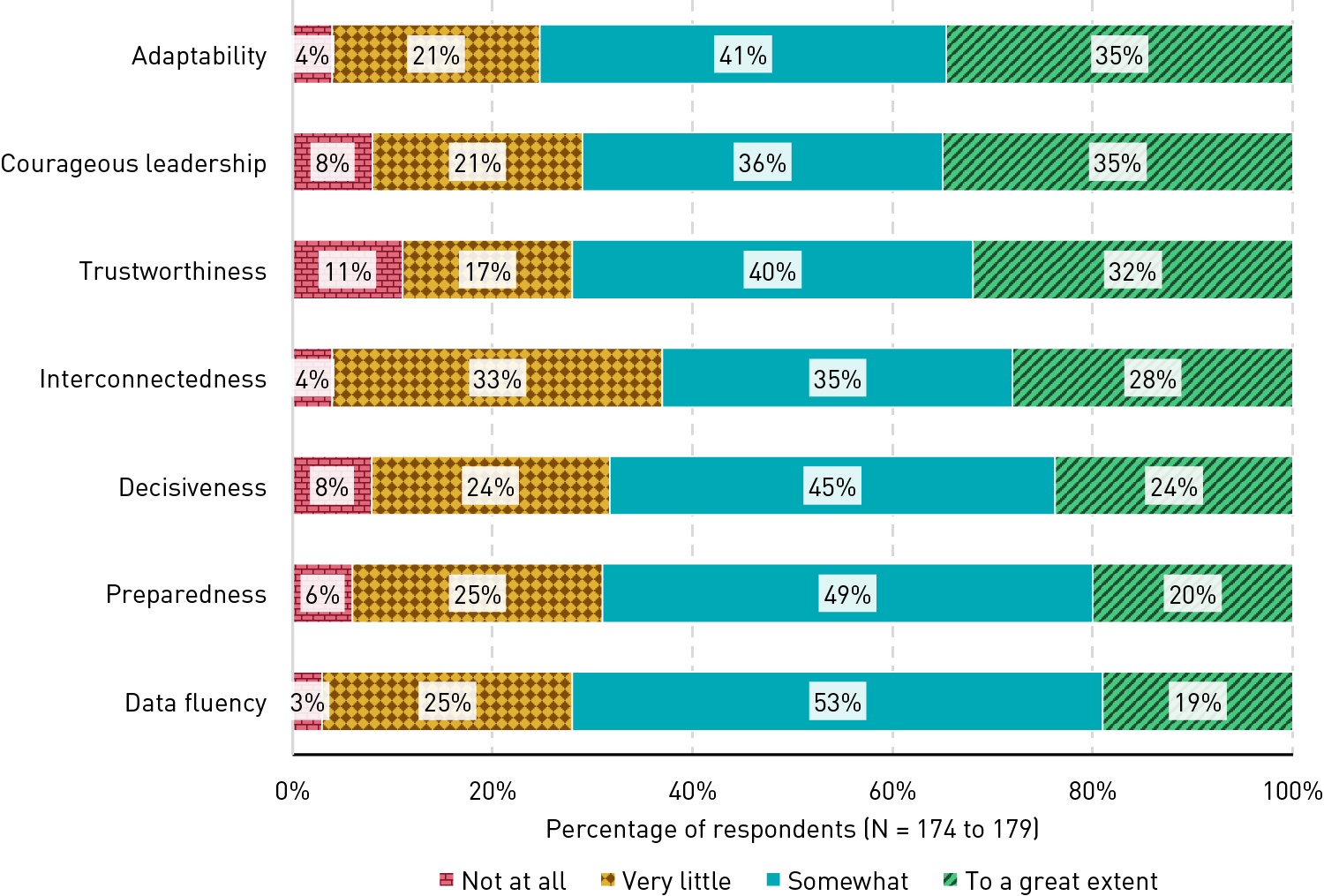
Taking a closer look at the seven attributes of resilience, a similar pattern emerged. When asked the extent to which institutions demonstrate each attribute, respondents most often chose "somewhat," although differences between the response categories were sometimes small. The attributes that were rated as being demonstrated most strongly (to a great extent) were adaptability (35%), courageous leadership (35%), and trustworthiness (32%), while data fluency was rated the lowest (19%). Across all attributes, 25% to 37% of respondents indicated their institutions demonstrated them "not at all" or "very little" (see figure 2). Overall, while many institutions demonstrate some elements of resilience, relatively few report these attributes at a high level, indicating a need to strengthen capacity across all attributes of resilience.
Figure 2. Extent to Which Institutions Are Demonstrating Resilience Attributes

Strength in resilience attributes enables institutions to navigate challenges successfully. In open-ended comments, respondents reported that their institution has successfully navigated a wide range of challenges over the past two to three years and identified specific resilience attributes that supported their efforts (see table 1). The most frequently cited challenge type that institutions successfully overcame was technology and infrastructure modernization, including efforts such as ERP migrations, cybersecurity incidents, network upgrades/failures, MFA/SSO rollouts, and other IT or infrastructure-related initiatives. The most frequently cited resilience attribute overall was decisiveness, particularly in taking quick, strategic action to address urgent challenges. Responses suggest that institutions rely on certain attributes to varying degrees depending on the type of challenge, with preparedness and decisiveness emerging as the most broadly valuable across contexts. These findings point to an opportunity to build strength in each attribute and apply them more widely across all challenge types.
Table 1. Most Frequently Cited Resilience Attribute by Challenge Type
| Challenge Type | Resilience Attribute Most Cited as Helpful |
|---|---|
| Technology and infrastructure modernization | Preparedness |
| Financial pressures and budget cuts | Decisiveness |
| Crisis response and emergency management | Preparedness |
| Strategic growth and innovation | Decisiveness |
| Cultural, political, and legal pressures | Courageous leadership |
| Enrollment declines and shifts | Data fluency |
The Data: Current Practices
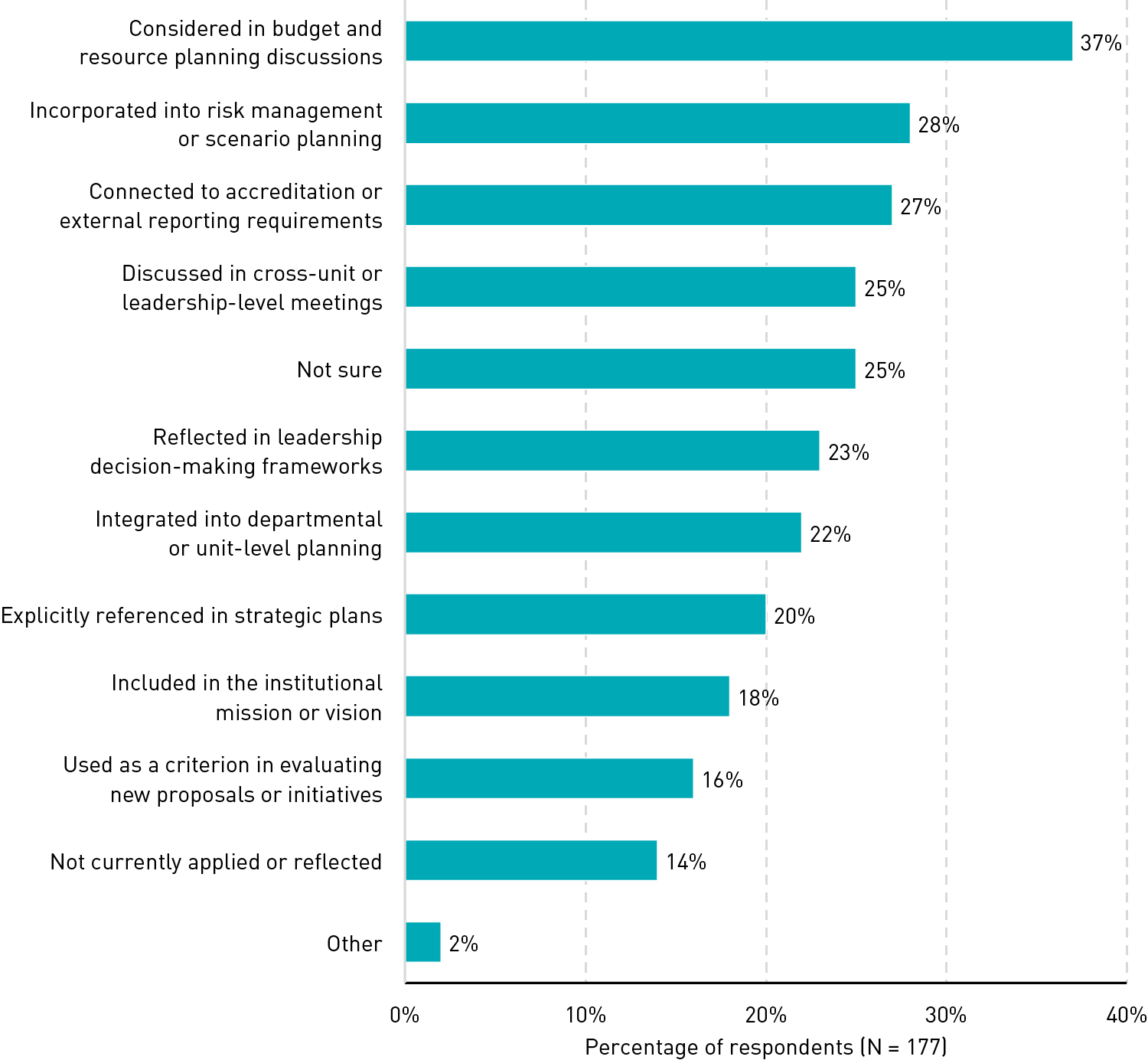
The application of resilience practices in planning and decision-making is limited. Fewer than 38% of respondents indicated that resilience practices are actively applied or reflected across nine areas related to strategic planning and decision-making. Resilience practices are reflected the most in consideration of budget and resource planning (37%), risk management and scenario planning (28%), and accreditation or external reporting requirements (27%). They are least reflected in the institutional mission or vision (18%) and the evaluation of new proposals or initiatives (16%). Of those who reported at least one application of resilience practices, 81% indicated that their institution applied them in multiple areas, suggesting that when such practices are present, they tend to be implemented across several dimensions. Although resilience practices may be applied across multiple aspects of planning, many institutions do not embed them consistently. Further, 25% of respondents are unsure whether resilience practices are being applied at their institution, while 14% said their institution has not applied them at all, pointing to potential gaps in awareness and formal efforts toward integrating resilience practices (see figure 3).
Figure 3. How Resilience Is Applied in Strategic Planning and Decision-Making

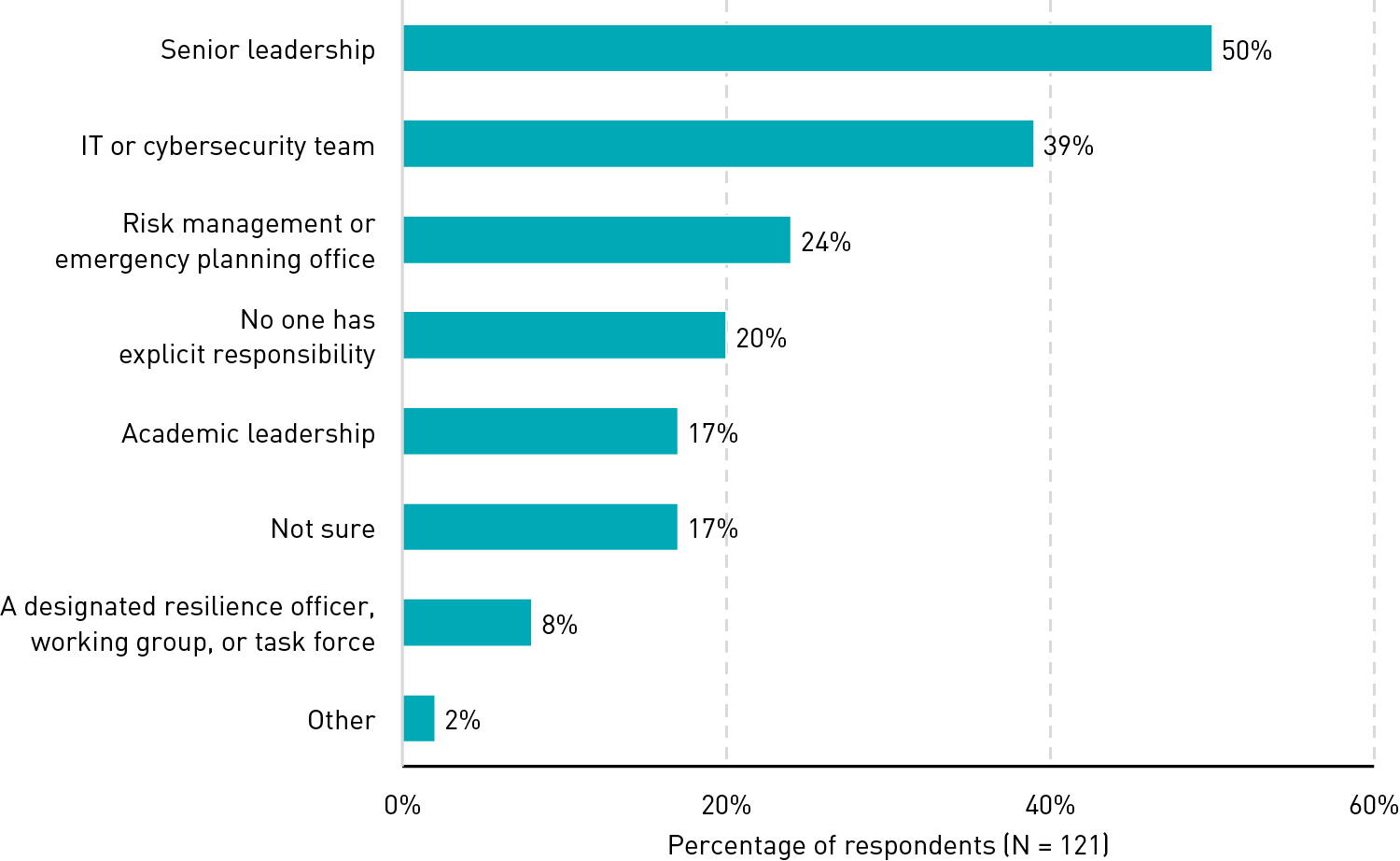
Resilience efforts are primarily led by senior leaders. Half of respondents (50%) said senior leadership is primarily responsible for institutional resilience, followed by IT or cybersecurity teams (39%). Of those who reported at least one responsible party, two-thirds (66%) indicated that responsibility is shared across multiple individuals or roles, averaging two per institution. Few indicated that resilience is primarily driven by designated roles, working groups, or task forces. Notably, 20% said no one has explicit responsibility, and 17% were unsure who is responsible, pointing to gaps in ownership and accountability (see figure 4). A lack of clear ownership can slow or weaken resilience efforts. Ensuring defined responsibility, supported by collaboration across roles, is key to building and maintaining resilience capacity.
Figure 4. Who Is Primarily Responsible for Institutional Resilience Efforts?

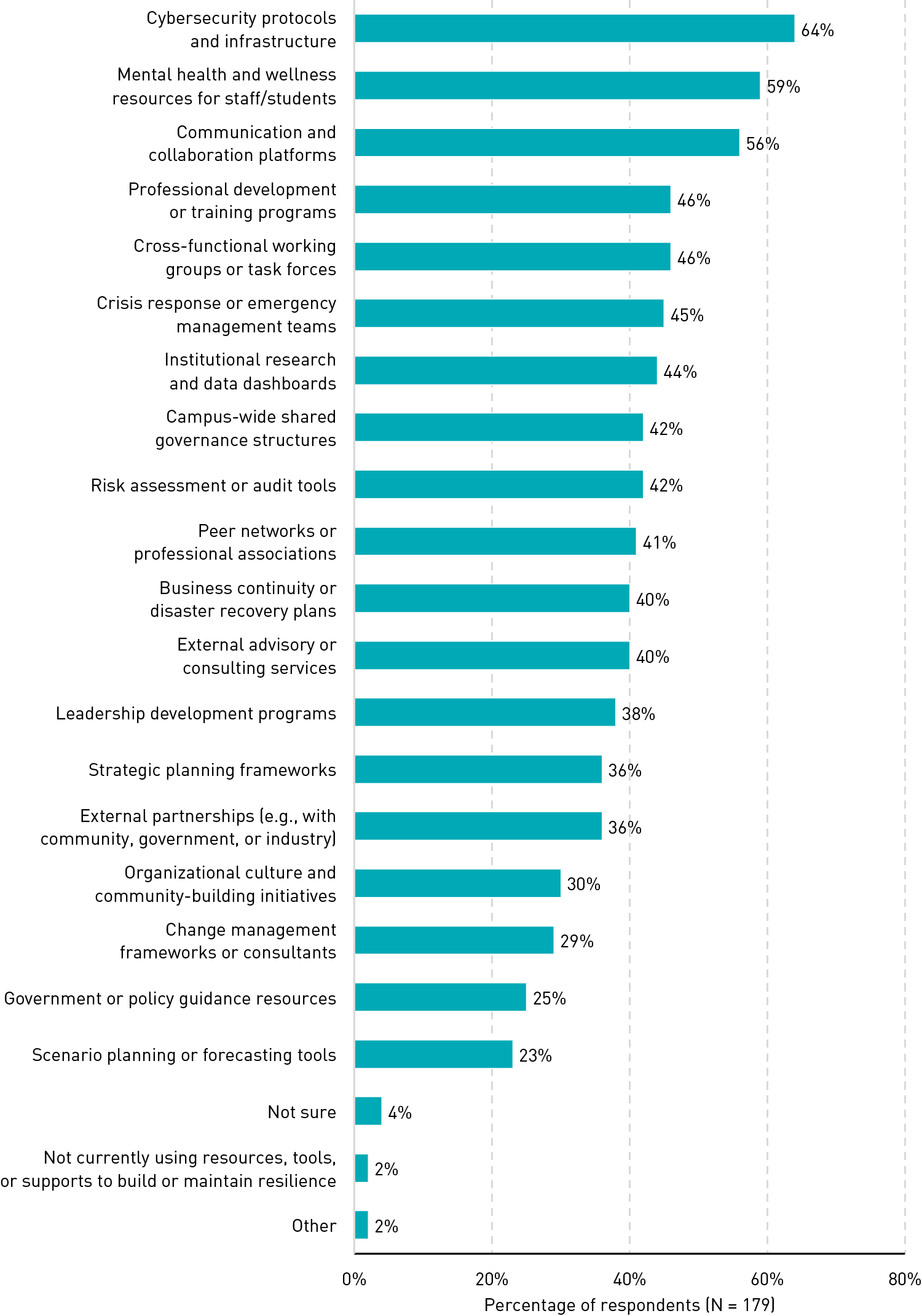
Institutions use a variety of resources to build and maintain resilience. Respondents who indicated that their institution uses at least one resource reported an average of eight resources used to support resilience efforts. The most commonly used resources are cybersecurity protocols and infrastructure (64%), mental health and wellness resources for staff and students (59%), and communication and collaboration platforms (56%). The least commonly used resources are change management frameworks or consultants (29%), government or policy guidance resources (25%), and scenario planning or forecasting tools (23%) (see figure 5). Taken together, these results suggest that while many institutions rely upon internal and practical day-to-day resources, fewer are making use of the broader strategic and external supports that help build long-term resilience.
Figure 5. Resources, Tools, and Supports Used to Build or Maintain Resilience

The Data: Challenges and Readiness for Future Change
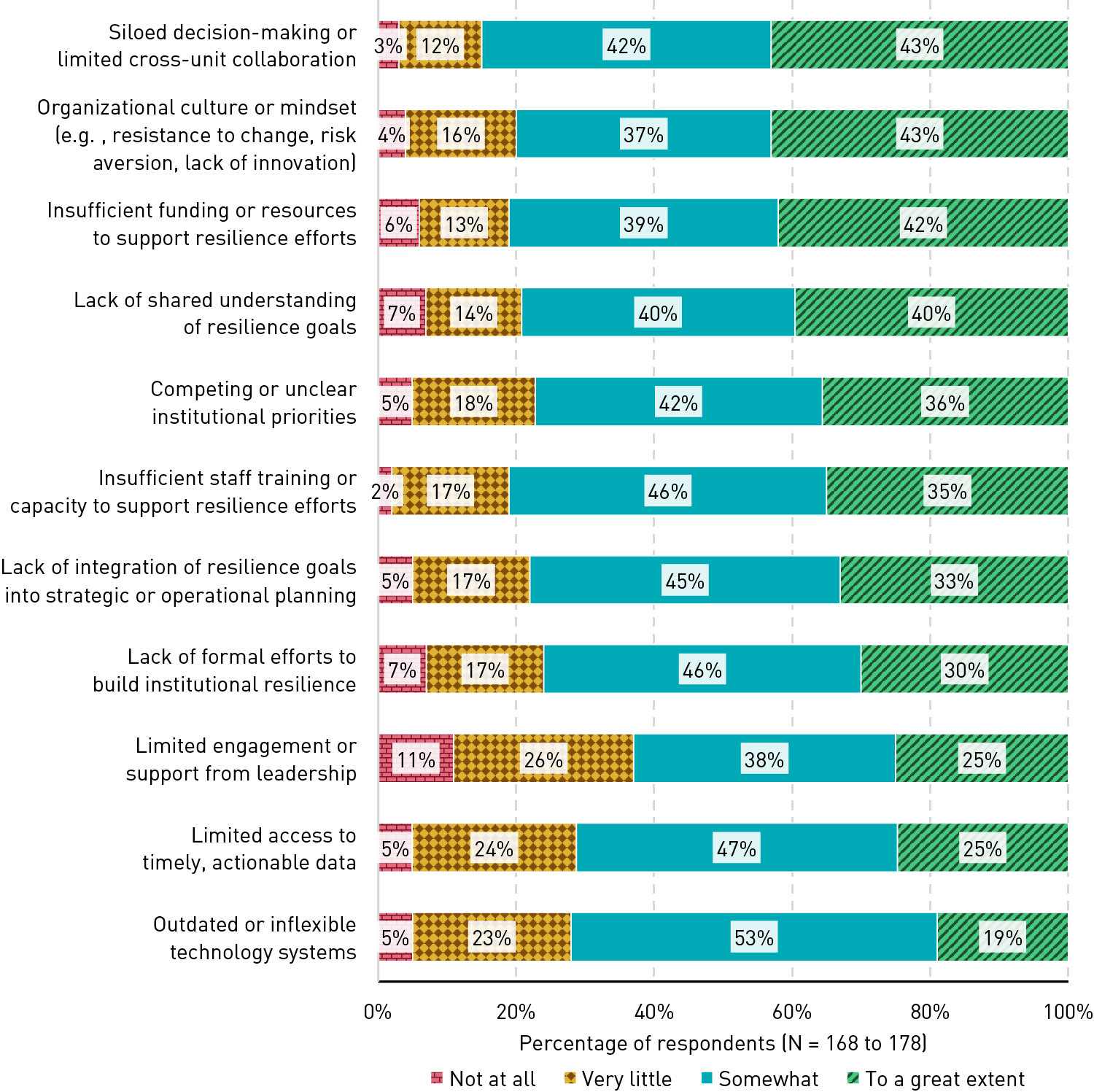
Multiple challenges limit progress on resilience efforts. Across eleven types of challenges, most respondents indicated that resilience efforts at their institution are somewhat or greatly affected by these challenges. The challenges that impact resilience efforts the most are siloed decision-making or limited cross-unit collaboration (43%), organizational culture or mindset (e.g., resistance to change, risk aversion, lack of innovation) (43%), and insufficient funding or resources (42%). Meanwhile, respondents said that their institution is challenged less by limited engagement or support from leadership (25%), limited access to timely, actionable data (25%), and outdated or inflexible technology systems (19%) (see figure 6). These results suggest that building resilience is more difficult because of how institutions are organized, work together, and are resourced.
Figure 6. Extent to Which Factors Challenge Institutional Resilience

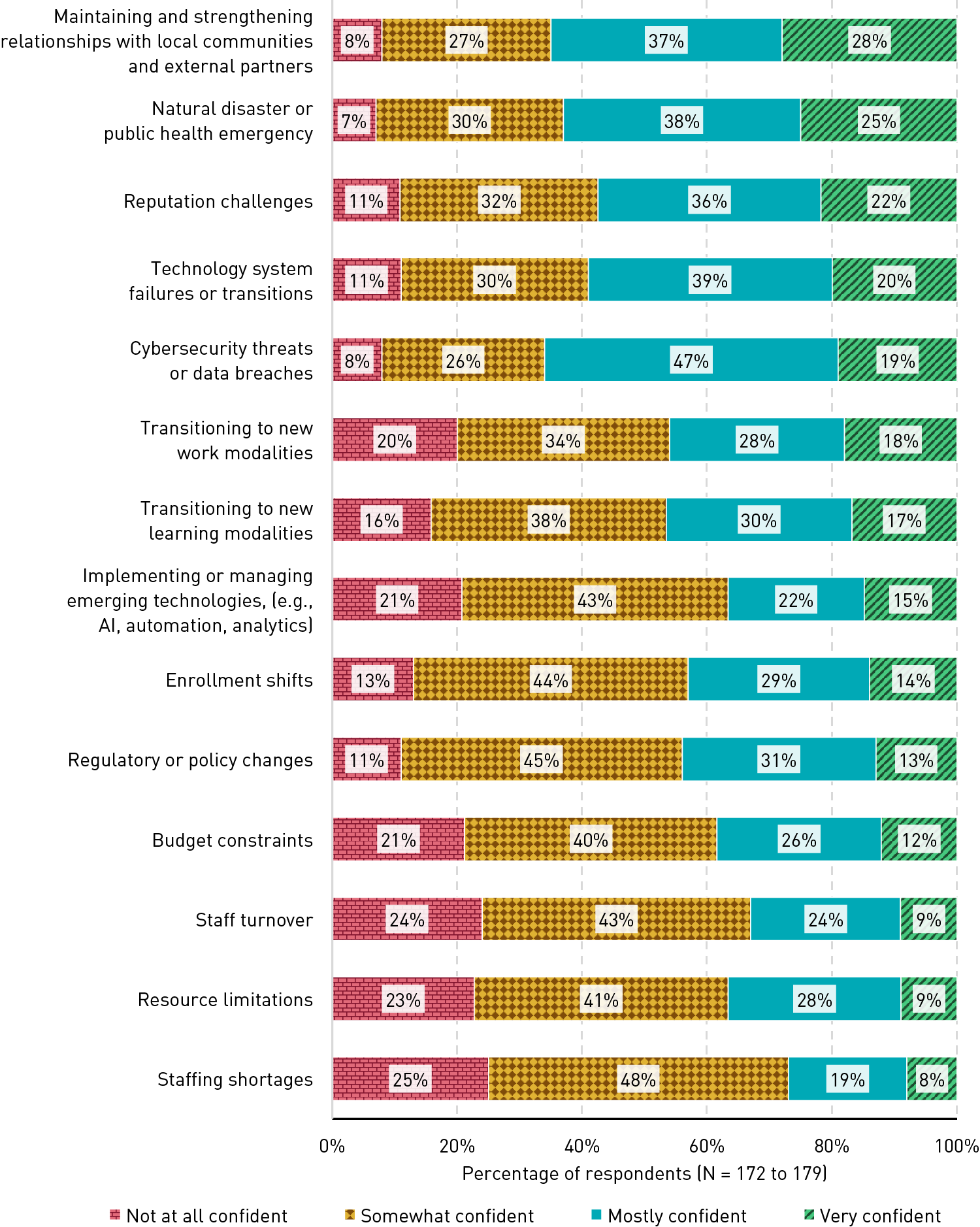
Stronger resilience practices boost confidence in navigating future challenges. When asked to rate their confidence in whether their institution can navigate future challenges, responses varied, with most responses falling between "somewhat" and "mostly" confident. Respondents reported the highest confidence (being mostly or very confident) in the ability of their institution to handle external or disruptive challenges such as cybersecurity threats or data breaches (66%), managing relationships with local communities and partners (65%), responding to natural disasters or public health emergencies (64%), handling technology system failures or transitions (60%), and protecting reputation (58%). Confidence was lowest for resource and capacity-related challenges such as budget constraints (38%), resource limitations (36%), staff turnover (33%), and staffing shortages (27%) (see figure 7). These areas of low confidence mirror trends in recent EDUCAUSE workforce reports, further illustrating that constrained resources and staffing insufficiencies remain persistent barriers to institutional effectiveness and are not likely to disappear in the near future. More importantly, a clear pattern emerged: The more strongly institutions demonstrated each resilience attribute, the more confident respondents were in the ability of their institution to navigate future challenges, suggesting that building these attributes could help close confidence gaps.
Figure 7. Confidence in Institutional Ability to Navigate Challenges in the Future

Promising Practices
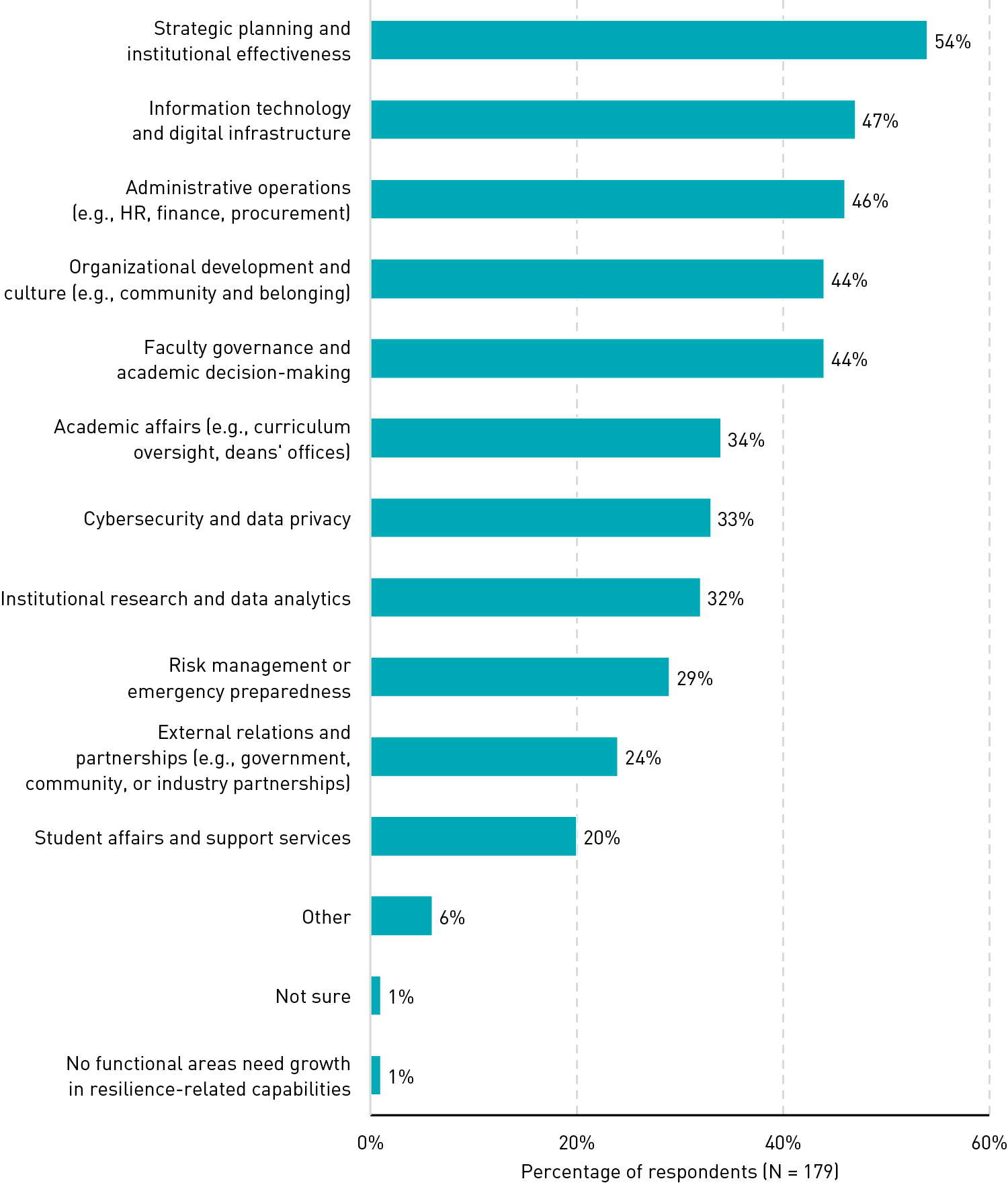
Internal functions show the greatest need for resilience growth. Respondents identified up to five functional areas that have the greatest need for growth in resilience-related capacity over the next one to two years. Overall, the biggest gaps in resilience capacity were in internal-facing areas and systems that keep the institution running, such as strategic planning and institutional effectiveness (54%), IT and digital infrastructure (47%), administrative operations (46%), and organizational culture and development (44%). Areas needing the least growth were external-facing areas such as risk management and emergency preparedness (29%) and managing external relations and partnerships (24%), in addition to service-oriented functions such as student affairs and support services (20%) (see figure 8).
Figure 8. Functional Areas with the Greatest Need for Growth in Resilience Capacity

Institutional resilience depends on more than resources and tools. Respondents identified the following key resources and supports needed to strengthen the resilience attributes at their institutions, as well as their overall ability to anticipate, adapt, and respond to change:
- Leadership and governance: Transparent leadership that represents the interests of the whole community, with clear governance models to guide decisions.
- Collaboration and communication: More consistent cross-campus collaboration and better information sharing so all areas are working together.
- Funding and staffing: Targeted investments in technology, infrastructure, and people, along with enough staff to reduce burnout and maintain daily operations.
- Change management: Dedicated staff, training, and processes to help manage change, improve adaptability, and shift culture toward continuous improvement.
- Efficiency and process improvement: Reducing overlapping tools and services, eliminating single points of failure, and streamlining systems to free up resources for strategic work.
- Training, tools, and benchmarking: Access to templates, data, and peer comparisons to help plan, prepare, and respond more effectively to challenges.
These needs illustrate that resilience isn't just about having the right people or tools in place; it's about creating and maintaining the conditions for them to work well together. Although respondents said their institutions are challenged less by leadership, they also said leadership could be more transparent and inclusive—which would help to strengthen trust and alignment. Similarly, enhancing capabilities in governance, collaboration, and change management can help ensure resources are used effectively. At the same time, building capacity in funding, staffing, and process improvement can reduce strain and free individuals to focus on proactive resilience efforts; i.e., anticipating challenges rather than only reacting to them.
Notes
- QuickPolls are less formal than EDUCAUSE survey research. They gather data in a single day or two, instead of over several weeks, and allow timely reporting of current issues. This poll was conducted on August 11–12, 2025, consisted of fifteen questions, and resulted in 179 complete responses. Poll invitations were sent to participants who are members of relevant groups on EDUCAUSE Connect platform. Our sample represents a range of institution types and FTE sizes. Jump back to footnote 1 in the text.
- Mark McCormack, "EDUCAUSE QuickPoll Results: Institutional and IT Resilience," EDUCAUSE Review, August 8, 2022. Jump back to footnote 2 in the text.
- Percentages have been rounded to the nearest whole number, occasionally resulting in sums just under or over 100%.Jump back to footnote 3 in the text.
Nicole Muscanell is Researcher at EDUCAUSE.
© 2025 EDUCAUSE. The content of this work is licensed under a Creative Commons BY-NC-ND 4.0 International License.