When shoulder surgery limited the use of his dominant arm, a faculty member turned to generative artificial intelligence (GenAI) to support teaching, research, communication, and software development. His experience illustrates how GenAI can reduce barriers to meaningful work while introducing new demands for human verification and judgment.
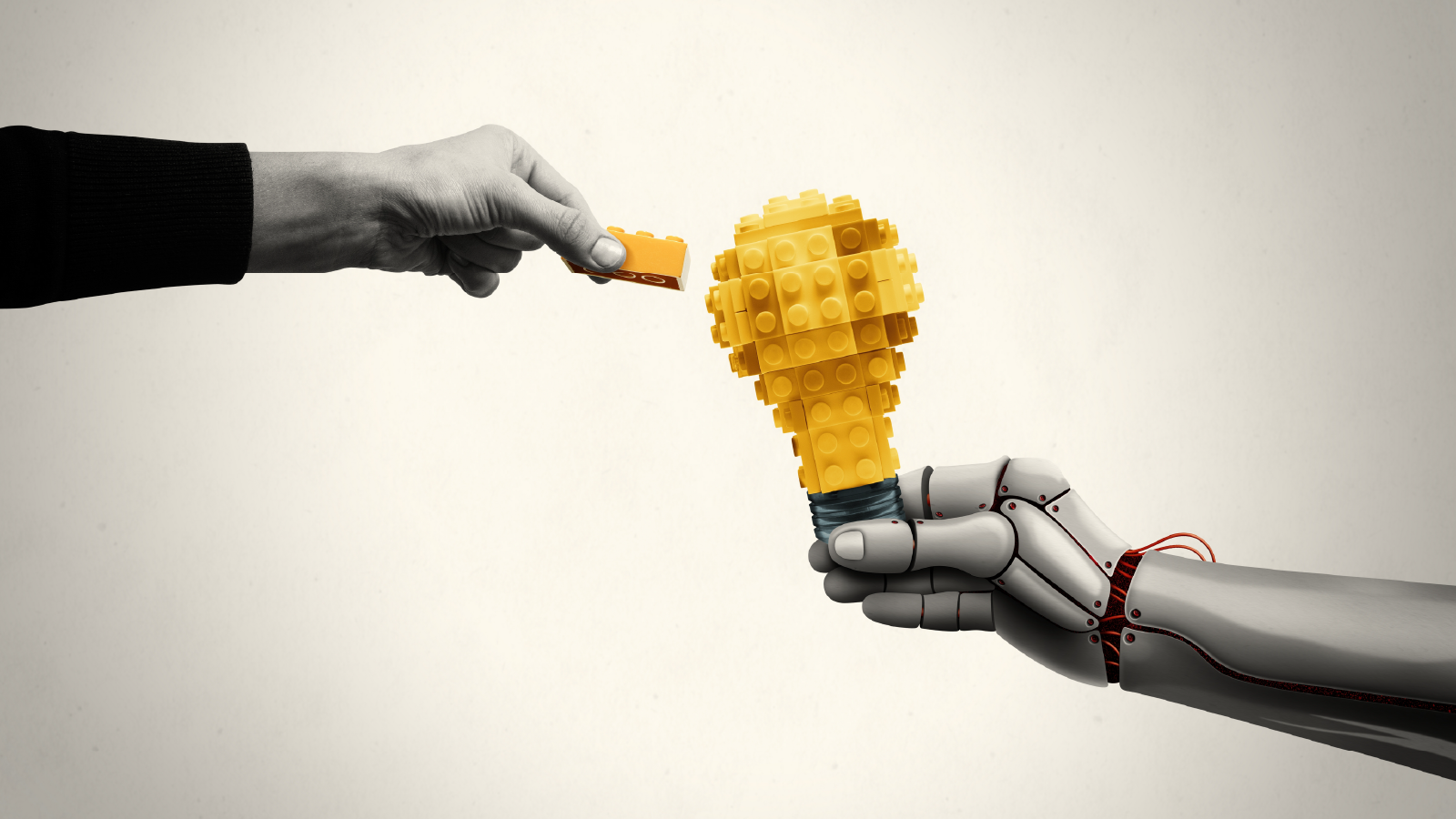
This isn't a story about coping or just getting by. It's an exploration of my relationship with intellectual and physical tasks, and what that reveals about the things that were never physical to begin with.
As an associate professor, program director, researcher, software developer, and speaker who teaches, studies, and helps shape institutional approaches to generative AI (GenAI), I unexpectedly became the n=1 subject of my own research question. After shoulder surgery left me with a temporary upper-extremity disability, I was forced to examine which parts of my academic, administrative, and personal life actually required the use of that arm. What I discovered was that much of the work I value most was never physical to begin with. As I looked more closely at the roles of judgment, care, creativity, and self-reflection in my work, I began to reconsider my notion of what "functioning" and "thriving" mean and the role GenAI could help bridge the gap that physical limitations can create in academic and professional engagement.
This experience highlighted a tension worth naming. I am not a neutral observer of AI. I teach AI literacy, research AI adoption, and contribute to AI policy and practice. Yet teaching, mentoring, research, and leadership derive their value from the relationships formed with colleagues, students, and friends, not from typing or other performative aspects of work. AI isn't here to replace that; it's here to support the work that doesn't require a human being behind it.
This perspective also extends beyond a single recovery. It challenges us as higher education teaching and learning professionals to think about accessibility not as an accommodation added onto normal work but as something designed into everyday practice. My situation was temporary, but many people live with physical challenges every day and receive far less support. Closing that gap begins not with more technology but with a shift in how we think about what we make room for and what we choose to value in the work itself.
The Disruption
In early August, I underwent four surgical procedures on my left shoulder, leaving my dominant arm immobilized. Although I temporarily lost the use of the hand I relied on to type syllabi, assist in live coding, draft emails, build rubrics, take meeting notes, and sketch training modules, my professional responsibilities remained unchanged.
The timing was not ideal. The fall academic term was about to begin, and I was preparing to deliver two fully online courses. I was also becoming the primary contact for high school esports coaches, assuming the chairship of a university athletics committee, and completing two conference papers. The courses had been substantially revised over the summer, but they still required verification and modification, and the usual start-of-term meetings, scheduling, and student communication continued. None of those responsibilities shrank to fit an arm in a sling.
Sustained one-handed typing wasn't just slow. Every sentence took noticeably longer, and more mistakes crept in. Fatigue set in quickly, not only from the physical strain but also from the cognitive cost of holding a sentence in my head while my available hand moved at a fraction of its usual speed, sometimes causing me to lose track of the words. I relied more heavily on institutionally approved and vetted GenAI platforms to produce meeting notes, emails, and paragraphs such as this one. The tools reduced the amount of typing but introduced the additional work of correcting transcription errors. Ideas and thoughts that once would have gone onto a notepad or scratchpad instead had to remain in my mind's eye.
Areas of GenAI-Augmented Function
Rather than offering a list of AI "life hacks," the following examples show where GenAI expanded what I could do, reduced physical friction, and provided less help than I expected.
Capture and Dictation
Voice was, and still is, my primary method of capturing notes. Voice-to-text transcription for note-taking became a necessity rather than a preference, and the tradeoff was that dictation was not as simple as speaking words and having them appear as intended. The built-in speech-to-text feature on my computer could transcribe my words verbatim, but it could not do interpretive work. Names, code, and the specific jargon of esports and game design rarely came out right on the first pass. That left me with the burden of reviewing everything, verifying the transcription, and ensuring that nothing unintended had been added. Making corrections meant slowly typing with one hand again. While voice transcription reduced the time I spent typing notes, the time it took to reread, verify, and correct reduced those gains more than I expected.
Research and Synthesis
Online research has its own physical overhead, something I had never fully appreciated until I had to do it all with one hand. Switching between tabs and moving between a PDF and a notes document were easier than I expected. The hard part was copying and pasting. Precision was the real challenge: I couldn't always select exactly what I meant to, which meant doing it again, and sometimes again after that, to get the right passage into the right place. That took more time than it ever had before. And none of these efficiencies replaced the thinking. Reading the material, making judgment calls about what mattered, and deciding what to keep did not become easier. The runway to get there got longer, and the fatigue and frustration built up, making the overall task harder.
GenAI tools did help me find relevant resources. I could describe a concept loosely and uncover relevant literature that a conventional keyword search likely would have missed. The verification work of navigating to each source and confirming its accuracy was still mine, but the AI tools were also remarkably good at revealing connections across academic disciplines and surfacing sources I likely would not have found otherwise. That was more than a reduction in friction; it changed the scope of the inquiry itself.
Curriculum Development
Drafting and iterating on course materials, assignments, discussion prompts, and module summaries used to mean building each piece more or less on its own and hoping everything still lined up. Now, I use AI to help keep it aligned: checking that the learning outcomes of a module still match the course-level outcomes, whether revisions have created inconsistencies between the syllabus and the module, and whether the assigned articles and videos are as relevant as possible. When I change one module, I can trace that change back through the rest of the course instead of hoping I remember to.
GenAI has also become a tool for reviewing course materials and supporting quality control. I use it to review quizzes and discussion questions for neutral rather than leading language and to think more carefully about what a question asks a student to demonstrate. The goal isn't merely an output from students, such as an essay, answer, or project; it's evidence of reflection on what they learned. Using GenAI for a second review prompts me to ask whether a question tests understanding or merely invites a plausible-sounding response. That review process has changed what I'm trying to build when I sit down to write an assignment.
Adaptive Training Design
Adaptive training design was the domain where the work evolved gradually rather than all at once. Before the surgery, I had already built and rebuilt multiple training modules and small games using AI, comparing what came out of each pass: the code itself, the structure underneath it, and what the experience felt like to use. That groundwork meant I wasn't starting from zero when my injury forced a shift in how I worked; I already knew the process, and what I needed afterward was a way to augment it rather than invent it. Along the way, I kept coming back to what Khan Academy does with adaptive learning, not only adjusting difficulty up or down based on whether an answer was right but asking the kind of question that pushes a learner to think a little harder, not just answer faster. That became the model I wanted: training that responds to reasoning, not merely correctness.
The timing of the injury mattered for another reason. As I became the primary point of contact for high school esports coaches across Montana, that work connected directly with my research on how coaches and players use GenAI in their everyday lives. It occurred to me that this could be another version of the same question: What if I built a training module for every title a coach might be responsible for? Most high school coaches cannot be experts in every game their programs support. A set of tools built around asking better questions, rather than replacing the coach, could still give their players something substantive to learn about gameplay, communication, and leadership. That offered a way to support coaches who often do this work with few resources.
During my recovery, I built a set of eight browser-based analysis trainers, one each for Valorant, Fortnite, Rocket League, League of Legends, Overwatch 2, Apex Legends, Marvel Rivals, and Super Smash Bros., under the umbrella of what I called the Why Series. Rather than testing whether players can identify a single correct move, the trainers ask players to explain why they would make a particular decision in a competitive situation. I supplied the game-specific content and worked with Claude Code to build and revise the code. I designed the adaptive logic around eight dimensions of performance; each trainer evaluates changes in a player's overall performance to determine the next question.
The trainers are publicly available at no cost to coaches and players, run entirely client-side, and require no login or installation. Each trainer includes eight or nine skill tracks specific to the decision space for that game, such as economy and utility timing in Valorant, rotation and boost economy in Rocket League, wave state and vision inference in League of Legends, and third-party reads and ring positioning in Apex Legends. Several trainers also adapt to the player's role or archetype.
Eight parallel content structures, each with role- or archetype-aware branching and adaptive difficulty, were produced on a timeline that would have been unlikely for one person typing with one hand. The injury didn't stop this project. In fact, it's difficult to imagine the project existing in this form without the AI-mediated workflow the injury forced on me. That reversal is the strongest evidence for the difference between compensation and genuine reallocation. The constraint didn't just preserve capacity; it enabled work that likely would not have happened otherwise.
Administrative Communication
In addition to coach outreach and committee scheduling, the most demanding aspect of administrative communication was the sheer volume of everyday correspondence: emails to and from the Office of Disability Equity Services, Experiential Learning and Career Services, my director, my dean, and prospective students. Dictating a response meant getting the language cleaned up enough to read like an email and not a transcript, and doing it fast enough that a reply didn't sit for two days. But speaking and writing are not the same task. I still had to think through my ideas, dictate them, reread the response to ensure that the spoken language worked on the page, dictate corrections, and check it again.
Grant Ideation and New Directions
At a research institution like the University of Montana, identifying and securing grant funding is a continual part of the work. Opportunities may come through collaborators across campus or emerge through our own outreach and research, but competition for funding continues to intensify. Finding ways to support students, strengthen programs, and advance institutional priorities is an ongoing responsibility rather than an occasional task.
AI has been useful for brainstorming as well as for helping me think through a specific prompt and how to answer it well using work I've already done. Pulling together past emails, old notes, and meeting summaries into a coherent response used to be a much more time-consuming task. Having a draft or framework built from existing materials, rather than starting over each time, has made the process far more manageable and freed up time to focus on strategy, evidence, and the proposal itself.
What Was Actually Mine
The tension within my experience isn't simply "GenAI helped me keep doing the same tasks" versus "GenAI enabled me to stop doing certain tasks." That framing is too clean. What I felt was pressure and worry about whether I would be able to keep doing, in some form, the things I had always done. I had not lived with a long-term physical disability before, and I had no clear sense of what was still possible. The real question was not which tasks to keep or drop but which parts of the work were my own and which were the mechanisms I had used to perform it. Talking, ideating out loud, and thinking through my own voice remained mine. Before my injury, I had always translated those ideas into language that sounded appropriately academic or professional on the page, a separate form of labor I had never recognized because I had always performed it myself by hand. GenAI helped with that translation, allowing me to devote more attention to developing the ideas and less to typing them out and hoping the grammar held up.
In teaching and curriculum work, that shift allowed me to stay with the bigger picture longer: what I want students to understand, and how I can build something that gives them that grounding without losing thoughtfulness. In research, it has meant being able to pull multiple threads together in ways I might not have tried before and explore ideas that do not all have to work. I learned that not every line of inquiry needs to lead to a dramatic result if the cost of exploring it is low.
What shifted, underneath all of it, was how I used my time: less on the mechanics of getting words onto a page and more on the thinking itself and the relationships that work was intended to serve.
Limits and Tradeoffs
One area where GenAI added work rather than removed it was in the review process: I needed to correct and evaluate dictated and GenAI-drafted text. That work was necessary, but the time involved was significant, and it came with its own fatigue. Correcting GenAI output was not a one-time task. It was a recurring cognitive load: reading every output with the assumption that something is wrong and cross-checking names, numbers, and course-specific details rather than trusting the draft. All of that work was on top of an already-taxed attention span from pain and disrupted sleep. AI-generated answers weren't always correct. Factual claims needed verification, and a plausible-sounding wrong answer was harder to catch than an obviously wrong one, which meant the correction process demanded more vigilance, not less. Over weeks, that vigilance became its own source of fatigue, separate from the physical recovery, and it's worth naming as a real cost rather than folding it quietly into the larger success story.
Because I was already fluent in AI, my experience as one person with a temporary disability may not reflect how others would use or experience GenAI and dictation tools. Additionally, my research shows that self-reported AI fluency and actual use don't always align.Footnote1 The same gap could apply here in reverse: I may be overestimating how well I understood my own workflow shift in real time. This account is best read as a single, closely observed case, not as evidence of what any given person recovering from surgery or living with a disability should expect from AI tools. I hope that it surfaces some gaps and maybe gives someone else a way to recognize a version of their own experience in it, even if the particulars look different. More broadly, I hope it contributes to conversations about how colleges and universities can better support people with disabilities and those experiencing temporary injuries or impairments. Research on GenAI within Universal Design for Learning (UDL) frameworks suggests that while AI-supported personalization holds real promise for accessibility, concerns about equity, bias, and uneven access to the tools and fluency needed to use them well continue to surface.Footnote2
Institutional Implications
Within accessibility and UDL contexts, the theory is familiar: design for the margins, and the center benefits, too. But what matters more is what it looks like in an actual classroom, for an actual practitioner, and for an actual student. What a few weeks of one-handed work made concrete is smaller and harder to wave away: the extra ten seconds before every email to decide whether dictating or typing causes less pain; the specific dread of a meeting that will require notes; and the way a "quick fix" to a rubric stops being quick when it takes three times as long to execute. Disability scholars working in autoethnography have argued that lived, first-person accounts carry a kind of evidentiary weight that theory alone doesn't, not as a substitute for the testimony of people with disabilities but as a way of making concrete what abstraction tends to flatten.Footnote3
My experience raised questions about how educators and peers recognize when a colleague or student is adapting how they work, particularly when the reason for that adaptation is not visible. Where does GenAI fit into that adaptation? I think the more useful shift is to get away from judging who is using GenAI and why and toward asking a functional question: What is the tool doing for someone, and is it helping that person continue the work that makes them a scholar or teacher?
In my experience, the goal of using GenAI during recovery was not to overcome my physical limitation but to continue thriving as a scholar while working within it. Recognizing this kind of adaptation requires language that accurately describes the role of the tool. When GenAI use is described only as a productivity tool, the barrier prompting its use can remain invisible. Describing GenAI as an accessibility tool when it serves that function can make those circumstances easier to recognize and the adaptation less likely to be treated with suspicion.
For faculty development, institutional AI literacy programs might reframe some GenAI tools as accessibility infrastructure rather than productivity add-ons. Recent work on integrating GenAI with UDL principles suggests that AI-generated rubrics, adaptive feedback, and multilingual support may provide additional ways to offer multiple forms of representation, feedback, and expression.Footnote4 "Accessibility infrastructure" isn't an abstract category until someone in the room needs it.
For my own research, my collaboration with GenAI points less toward one specific project and more toward a broader commitment: continuing to do research at a high level, whatever form that takes next, rather than assuming that physical limitation has to mean a smaller scope of work.
A Different Way of Working
When my shoulder injury left me working one-handed, I expected GenAI to produce only incremental changes: it would help me answer emails a little faster and manage the routine parts of my job while I healed. What shifted was bigger than my workflow. I became more aware of what colleagues, friends, and students may be carrying every day, including circumstances that are not visible to others. The experience changed how I think about moving through the world alongside other people and how much of their experience may be invisible to me.
What mattered most was that I could keep working as a scholar, showing up as an educator, and serving as a mentor through methods adapted to my circumstances. Those roles did not depend on GenAI, but the tools made them easier to continue during my recovery and enabled work that otherwise might have taken a different form or been much harder to complete. That, to me, is the real finding: a new way of thinking about the work, the mechanisms I use to perform it, and the people it is for.
Author's Note
Consistent with the practices described here, I drafted this article primarily through dictation. I used GenAI tools to transcribe spoken content, organize and refine the prose, and assist with identifying and summarizing cited sources. The experiences, analysis, judgments, and conclusions are my own. I reviewed and substantially revised all AI-assisted text and verified the cited sources against the original publications.
Notes
- Michael Cassens, "Do Generative AI and Esports Mix? The Student-Athlete Perspective," presentation, Esports Research Network Conference 2026, University of Tsukuba, Japan, September 15–17, 2026. Jump back to footnote 1 in the text.
- Kevin J. Mallary et al., "Artificial Intelligence and Universal Design for Learning: Transforming Teaching and Learning in Adult and Continuing Higher Education," New Directions for Adult and Continuing Education, no. 188 (2025): 39–47; Brenda McDermott, "AI as an Accessibility Tool: Using Generative AI to Support Universal Design for Learning Approach," in Academic Integrity in the Age of Artificial Intelligence, ed. Saadia Mahmud (IGI Global, 2024), 162–174. Jump back to footnote 2 in the text.
- Tin Doan and Simon Darcy, "Autoethnographic Disability-Related Research in Hospitality and Tourism Journals: Empowering Marginalized Identity Scholars' Voices," Journal of Travel Research 64, no. 1 (2025): 238–244. Jump back to footnote 3 in the text.
- Mallary et al., "Artificial Intelligence and Universal Design for Learning." Jump back to footnote 4 in the text.
Michael Cassens is Associate Professor at the University of Montana.
© 2026 Michael Cassens. The content of this work is licensed under a Creative Commons BY 4.0 International License.