
Large language models (LLMs) may be nearing their limits, challenging assumptions about the transformative potential of artificial intelligence.

What if artificial intelligence (AI) does not transform society in the way so many predict? What if, instead of displacing tens of millions of professional jobs or rendering classrooms obsolete, AI (more specifically, large language models [LLMs]) turns out to be a plateau technology?
For higher education, the question is existential. Earlier this year, Sam Altman, CEO of OpenAI, remarked, "I don't think I'm going to be smarter than GPT-5."Footnote1 That was startling because achieving human-level intelligence through AI would be an extraordinary breakthrough. Yet, only six months later, following the release of GPT-5, he acknowledged that the models had "already saturated the chat use case."Footnote2 This shift in perspective raises an important question: What if Altman's latter admission proves more prescient than his earlier optimism?
If LLMs are nearing their limits, both curricular decisions and existential anxieties take on new significance, particularly when many AI implementation efforts have been failing.Footnote3
The early internet illustrates how both advocates and cynics can be wrong. Visionaries believed that schools, libraries, and even stores would soon become obsolete, while critics like Clifford Stoll referred to the internet as a "wasteland of unfiltered data" that would never rival the local mall.Footnote4 Each position had merit, but overshot reality. The internet did transform society, but it did so unevenly and in ways that no one predicted with complete accuracy. That parallel is instructive today.
A brief technology review is necessary to situate this moment in AI development. LLMs are just one branch on the broader tree of approaches to AI. Since 2017, the LLM branch has grown so rapidly and achieved so much success that it could easily be mistaken for the whole. But despite the breakthrough transformer model and advanced training techniques, it is not obvious that this branch alone will lead to human-level intelligence. While it is probable that LLMs will soon essentially solve the domain of natural language processing, they may not be sufficient to solve the challenges of reasoning, perception, and judgment.
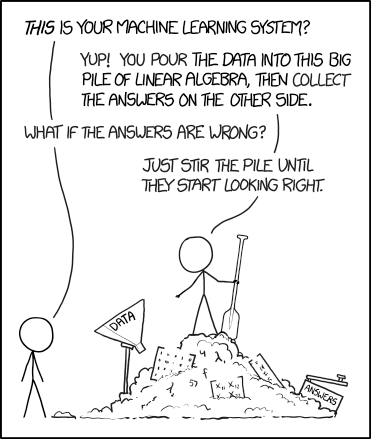
AI firms are keenly aware of this challenge, and they have been working hard to scaffold laterally. Extending LLMs through the use of agents is a step forward, as it allows coupling a GPT-like model with existing software tools and other machine learning approaches. Multimodal model development has been encouraging, and retrieval augmentation has become a useful tool in enterprise settings for grounding LLMs. Yet, the underlying constraints remain: LLMs lack an inherent understanding of truth, are not grounded in the physical or social world, and continue to struggle with complex reasoning.
There are also economic challenges that suggest LLMs may be nearing their limit. Building and running an LLM, called training and inference, is energy-intensive, and the International Energy Agency predicts that in just five years, U.S. data processing for AI may consume more electricity than all traditional energy-intensive manufacturing sectors combined.Footnote5
Staggering capital inflows to AI companies have encouraged technology firms to pursue a brute-force approach to AI development in which improvements are realized almost entirely through scale: larger models and longer training runs. This approach drives up electricity and cooling demands, likely leading to increased utility costs and proving unsustainable.Footnote6
The history of technology suggests that multiple breakthroughs will be necessary. Just as deep learning unlocked computer vision and transformers unlocked natural language processing, future progress may depend on advances in other branches of AI that have yet to achieve their breakthrough moment. In this sense, LLMs may be the current plateau along a longer ascent. AI firms are making great progress in achieving efficiency gains in energy use. For example, the mixture of expert models (where smaller efficient models handle simpler tasks) has gained widespread implementation among providers. While such efficiency gains may delay the plateau, they optimize within fundamental constraints rather than transcending them.
But LLMs are here to stay and their impact is transformative. As a tool for augmentation, they are already supporting learning by summarizing information and inspiring ideas, among many other productive uses. Higher education needs to adapt with a clarity of purpose and principle. Both students and faculty need clear guidance and firm expectations for use. The calculator forever changed how math is taught, the computer transformed instruction in almost every academic field, and the internet certainly had an impact on education, though more discrete. LLMs are unique. They may be more transformative than the internet but less revolutionary than the computer.
Three years into the LLM era, higher education needs to take a definitive position. Allowing students to use AI to complete entire assignments is as pedagogically bankrupt as pretending it doesn't exist. Permitting unrestricted faculty use in grading papers with AI while heavily restricting student use is similarly myopic. The question isn't how much AI to permit, but rather this: What are we developing in students and faculty, and when does AI enhance rather than replace development? There are answers to these questions in each academic field and it is time to start defining them.
Meanwhile, technology companies and media say the complete transformation of society by AI is inevitable. It may be. But this narrative treats technology as a deterministic force. People decide how technologies are used and what they mean, and LLM adoption has progressed more slowly than the hype would suggest.Footnote7 If this trend continues, it means that wholesale reinvention is not required. But it doesn't fall into a false binary of doing nothing either! Integration throughout higher education remains essential due to the tremendous value of the technology in its current and plausible near-term states.
For faculty, this means teaching with AI tools for ideation while preserving traditional assessment methods that verify understanding. For administrators, this means investing in AI literacy programs rather than wholesale curricular redesign. For IT leaders, this means rigorous improvements to data modeling and supporting the selective adoption of AI tools. LLMs are a transformative technology, and adaptation is necessary and wise, but it must be nuanced.
If LLMs plateau, we need to situate them as tools for deepening learning and set them aside when they distort it. Perhaps the real test isn't whether GPT-5 will be smarter than Sam Altman. Instead, the question may be whether higher education is wise enough to know the difference between a tool and a master.
Notes
- Mike Kaput,"Sam Altman Just Made Some Eye-Popping Predictions About GPT-5—and the Next 2 Years of AI," Marketing Artificial Intelligence Institute (blog), February 11, 2025.Jump back to footnote 1 in the text.
- MacKenzie Sigalos,"Sam Altman on GPT-6: 'People Want Memory," AI Effect, CNBC, August 19, 2025.Jump back to footnote 2 in the text.
- MacKenzie Sigalos,”MIT Report: 95% of Generative AI Pilots at Companies Are Failing” Fortune, August 18, 2025.Jump back to footnote 3 in the text.
- Clifford Stoll, "Why the Web Won't Be Nirvana,"Newsweek, February 26, 1995.Jump back to footnote 4 in the text.
- Energy and AI: World Energy Outlook Special Report (International Energy Agency, April 2025). Jump back to footnote 5 in the text.
- The ravenous appetite for compute could even cannibalize older models such as cloud computing infrastructure, creating an inverse movement to on-premise computing due to scarcity of resources.Jump back to footnote 6 in the text.
- Brian Basgen, "AI as a Thought Partner in Education," EDUCAUSE Review, April 9, 2025.Jump back to footnote 7 in the text.
Brian Basgen is VP, Digital & Physical Infrastructure at Emerson College.
© 2025 Brian Basgen. The content of this work is licensed under a Creative Commons BY-NC-SA 4.0 International License.