A Student 360 framework helps higher education institutions connect goals, competencies, and engagement to deliver holistic, proactive student support at scale.
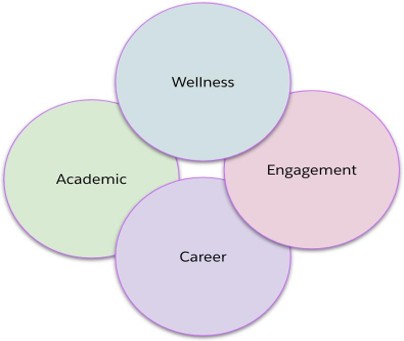
In today's evolving higher education landscape, students must navigate multiple dimensions of their lives—career, academic, wellness, and engagement (CAWE). Their ability to set goals, build competencies, and thrive across these dimensions shapes not only academic outcomes but also long-term personal and professional success.
To support modern learners effectively, institutions need a connected framework that helps students define meaningful goals, develop competencies, address skill gaps, and adapt their plans as their aspirations evolve. Such an approach enables institutions to support learners in becoming academically successful, resilient, purpose-driven, and prepared for long-term success. Artificial intelligence (AI) creates new possibilities to operationalize and scale this level of holistic, student-centered support in an actionable way.
A framework for reimagining student success through the CAWE dimensions can help institutions move beyond fragmented support models toward a more connected, goal-oriented, and future-ready learner experience.
The CAWE Dimensions of Student Success
Student success has traditionally been measured through retention and graduation rates. Today, institutions worldwide recognize that true student success requires a holistic approach that addresses multiple aspects of student well-being—empowering students to thrive both in and out of the classroom. By fostering an environment that values and supports overall student well-being, institutions can pave the way for deeper, more meaningful success.Footnote1
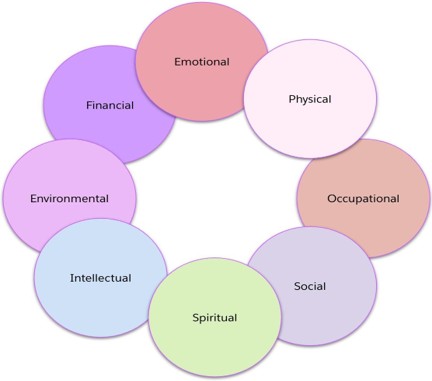
Well-being is multidimensional, encompassing four core dimensions, and, in some frameworks, as many as eight (see figures 1 and 2).
Career
The career dimension bridges academic learning and professional success, guiding students through career exploration, skill development, and real-world application. Students engage in experiential learning through internships, co-op programs, campus employment, and case competitions—building practical skills and industry insights.
Academic
The academic dimension forms the foundation of the student journey, encompassing degree progression, coursework, and timely graduation. Yet it extends far beyond the classroom to include enriching experiences such as study abroad, research opportunities, and co-op programs that deepen understanding and foster global perspectives.
Wellness
The wellness dimension, encompassing physical and mental health, profoundly influences every other aspect of student life, from academic performance to career readiness and social engagement. Research shows that well-being significantly affects students' ability to succeed both during their education and in their career engagement.Footnote2
Engagement
The engagement dimension encompasses meaningful involvement in campus life beyond academics and career preparation. By participating in student organizations, taking on leadership roles, competing in athletics, and engaging in community service, students build connections, discover passions, and develop a sense of belonging.Footnote3 These experiences cultivate teamwork, hone talents, and shape well-rounded individuals. Active participation fosters personal and professional growth, a sense of purpose and community, and lifelong success.
Current Institutional Support for Students Across CAWE
While many institutions strive to support students holistically across CAWE dimensions, challenges often arise that can impact the effectiveness of these efforts. These challenges stem from fragmented systems and resource constraints that limit institutions' ability to provide truly integrated support.
Focused Effort on Academic Advising
Academic advisors are typically assigned to students upon enrollment, but overwhelming caseloads—often ranging from 350 to 400 students per advisor—force them to focus primarily on administrative tasks: major declarations, degree planning, enrollment deadlines, and registration holds.Footnote4 With time consumed by these necessities, advisors have limited capacity for personalized, comprehensive support that addresses students' broader development.
Career services, while valuable for résumé development and interview preparation, often operate in isolation, disconnected from academic advising and students' holistic development. This siloed approach means students receive fragmented guidance rather than integrated support across their journey.
Limited Visibility into Student Experience
Current technology systems capture only fragments of students' experience. Many institutions lack a comprehensive view of the students' involvement, competencies, and aspirations.
- Student involvement: Cocurricular activities, extracurricular participation, leadership roles, and internships—key components that shape well-being and personal growth.
- Competencies and skills: Both capabilities students bring and those they develop through various experiences, creating blind spots in understanding their evolving strengths and needs.
- Life goals and aspirations: Limited visibility into students' personal ambitions across CAWE dimensions.
This gap is especially pronounced for first-generation, international, minority, and other underrepresented students, who often feel uncertain about navigating their educational and personal journeys.
The Result: An Incomplete Picture
Without an integrated view of student goals, engagement, and skills, advisors lack tools to identify gaps, connect students to relevant opportunities, or provide proactive, holistic support that fosters long-term success across the CAWE dimensions.
What Institutions Need: A Student 360 Framework
Students arrive at college with aspirations: they want to build a meaningful career, make a difference in their community, and grow into the people they want to become. But turning aspirations into reality requires more than hope. It demands strategic planning, intentional experiences, and continuous support. This is where institutions become transformative partners, not just degree providers.
Salesforce Education Cloud provides a Student 360 framework that reimagines this partnership by centering everything around learners' goals. Rather than offering disconnected services and hoping students find what they need, institutions can guide learners through a connected journey: helping them articulate SMART (specific, measurable, achievable, relevant, and time-bound) goals across CAWE dimensions; identifying which campus experiences will build the competencies needed to achieve those goals; and tracking progress while adapting support as aspirations evolve.
Understanding the Whole Student
This approach only works if institutions truly understand each student. Who are they today? What strengths, interests, and capabilities do they bring? What gaps need to be addressed?
Education Cloud creates this comprehensive view by capturing student attributes, involvement patterns, and competency development across the full range of student experiences—from coursework and co-curricular activities to internships, leadership roles, and wellness practices. This living profile gives advisors the context needed for personalized guidance.
From Aspirations to Achievement
With this foundation of unified and trusted student data, AI becomes a powerful enabler throughout the learner journey. Students complete assessments to discover their strengths and explore possibilities they hadn't considered. Education Cloud incorporates a Student Goals AI agent that helps learners translate broad aspirations into concrete SMART goals and surface specific campus involvements that will move them forward.
As students engage in these experiences, the Education Cloud platform tracks the competencies they're gaining: from leadership skills gained through involvement in student organizations to technical and professional capabilities developed through coursework and internships. When students drift off course or encounter obstacles, the platform surfaces those patterns early and equips advisors with context, resources, and actions that will provide timely support.
A Holistic Ecosystem of Partnership
This approach connects aspirations, goals, experiences, competencies, and support into a continuous cycle of student development. Every piece connects: aspirations drive goal setting, goals inform recommended experiences, experiences build competencies, and competencies enable progress toward aspirations. The result is a shift from managing student records to actively supporting student success, helping each learner progress toward the future they envision.
From Vision to Reality: Key Building Blocks
Operationalizing the Student 360 framework requires deliberate steps that weave together student understanding, data integration, goal discovery, well-being monitoring, and advisor intelligence into a cohesive ecosystem.
1. Build a Comprehensive Student Profile
Begin by developing a comprehensive understanding of each student. Deploy career and interest assessments that help learners explore their strengths and values, and discover possibilities they may not have previously considered. Capture their aspirations across CAWE dimensions. Document student attributes: their interests, preferences, affinities, and the competencies they have developed through previous experiences. This foundational understanding creates a baseline for personalized guidance throughout their journey.
2. Model Campus Involvements and Support Programs
Systematically catalog the experiences available to students, such as student organizations, athletics, research opportunities, internships, wellness programs, and leadership roles. For each involvement, map the competencies students will develop based on level and duration of participation. This inventory helps connect student aspirations with campus opportunities that build relevant competencies.
3. Enable AI-Powered Goal Discovery and Planning
Empower students to translate broad aspirations into actionable SMART goals with AI support. The Student Goals AI agent helps them articulate specific objectives across CAWE dimensions, then identifies the campus involvements that align with those goals. As students engage, the competencies they acquire are tracked, creating a dynamic record that evolves with their experiences.
4. Integrate Data Securely Across the Student Experience
Student 360 requires institutions to break down data silos. Integrate academic performance data, including quiz scores, assignment completion, class participation, and discussion engagement, from the learning management system into the student success platform. This enables advisors to identify students who are struggling in specific courses based on current performance before issues become academic failures. Integrate data to pull in behavioral signals from across campus: point-of-sale transactions, library swipes, meal card usage patterns. A student who stops having meals, reduces library visits, or changes spending patterns may be experiencing well-being challenges, often before those challenges impact academic performance. This comprehensive data integration creates a true 360-degree learner view that enables proactive support across the CAWE dimensions.
5. Monitor Student Well-Being Continuously
Implement regular pulse checks that capture student sentiment, stress levels, engagement, and overall well-being. These check-ins provide early warning signals when students are struggling, enabling proactive outreach rather than reactive intervention. Well-being data, integrated with academic and engagement patterns, gives advisors a complete picture of each student.
6. Equip Advisors with AI-Powered Intelligence
Transform advising from administrative task management to strategic partnership by equipping staff with comprehensive student context. The advising AI agent in Education Cloud generates a crisp, comprehensive advising summary—showing goals, progress, competencies, involvement patterns, and well-being trends—alongside recommended next steps. When an advisor meets with a student, the advisor is prepared with relevant insights: skill gaps to address, opportunities to suggest, obstacles to explore, and resources to recommend.
These building blocks work together to create the holistic ecosystem of partnership described above—where student aspirations drive goal-setting, goals inform experiences, experiences build competencies, and advisors provide strategic guidance at every step. Implementation begins with one or two building blocks and expands as institutions see impact and build capacity.
Conclusion
The future of higher education lies not in managing students through a system, but in partnering with them toward their aspirations. As competition intensifies and student expectations evolve, institutions that embrace holistic support across CAWE dimensions will define what student success means in the decades ahead.
A Student 360 framework—powered by integrated data, AI intelligence, and goal-centered design—transforms this vision from aspiration to reality. It enables institutions to see each student completely, support them strategically, and guide them proactively through the complex journey of personal and professional development.
The question facing institutional leaders is not whether to adopt this approach but how quickly to begin. Students arrive with dreams that deserve more than fragmented services and reactive interventions. They need, and increasingly demand, institutions that truly understand them, connect them to meaningful experiences, and partner with them in building the future they envision. The technology and frameworks to support this transformation already exist. The choices institutions make today will shape how effectively they support learners tomorrow.
Thank You

Notes
- Salesforce, Connected Education Report, Fourth Edition (Salesforce, 2025). Jump back to footnote 1 in the text.
- American College Health Association, American College Health Association-National College Health Assessment II: Reference Group Executive Summary Spring 2019 (American College Health Association, 2019). Jump back to footnote 2 in the text.
- Stephen John Nii Amu Kwei Quaye and Shaun R. Harper, eds., Student Engagement in Higher Education: Theoretical Perspectives and Practical Approaches for Diverse Populations, 2nd ed. (Routledge, 2014). Jump back to footnote 3 in the text.
- Dan Brennan et al., Driving Toward a Degree 2025: Delivering Value and Ensuring Viability (Tyton Partners, August 2025). Jump back to footnote 4 in the text.
Neha Agarwal is Senior Product Manager at Salesforce.
© 2026 Salesforce.